Wooden Massage Roller Benefits: What They Can and Cannot Do
Quick answer
People often expect wooden massage rollers to improve circulation, remove cellulite or replace professional massage. Their clearest practical strength is much simpler: they give you direct control over pressure, movement and the area you want to massage.
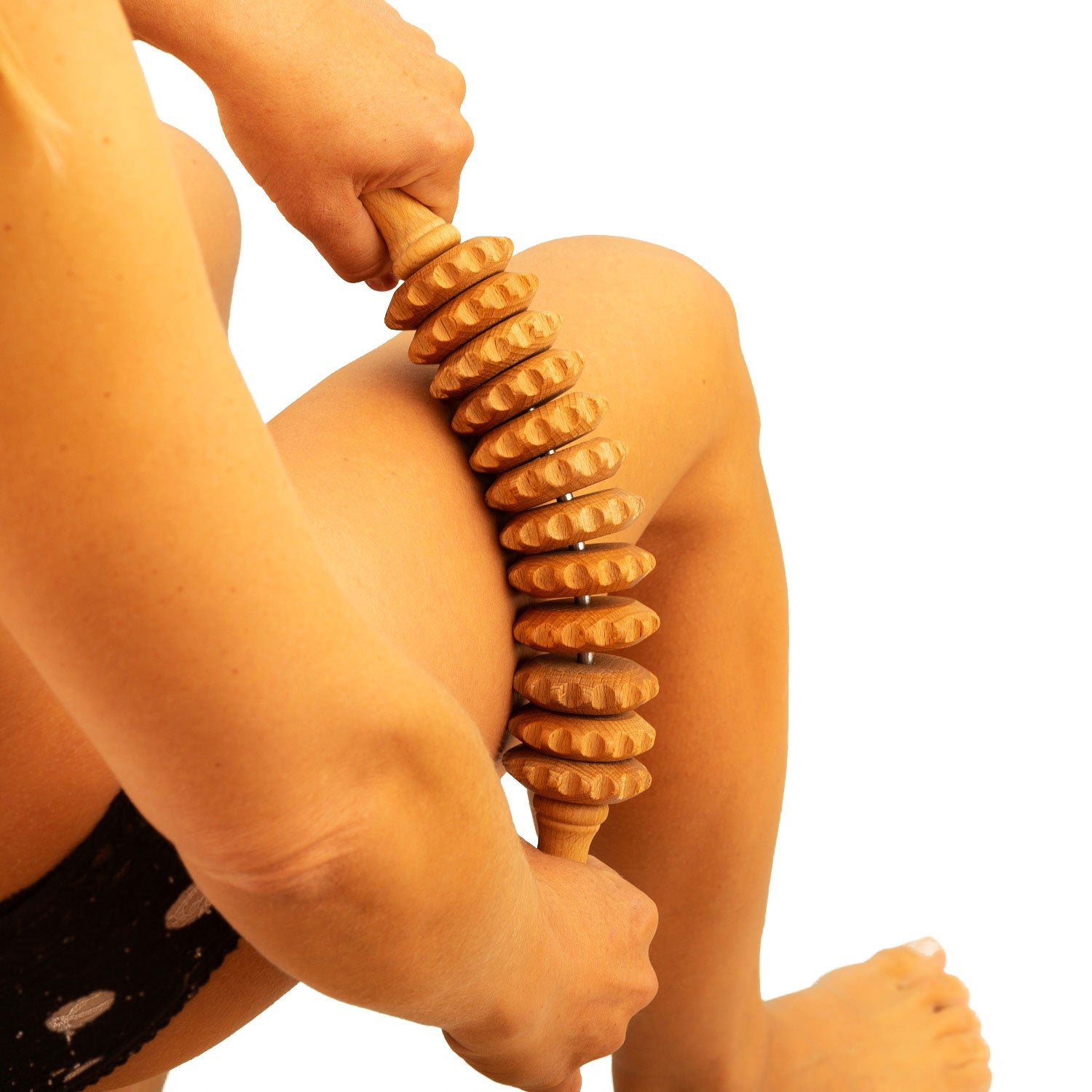
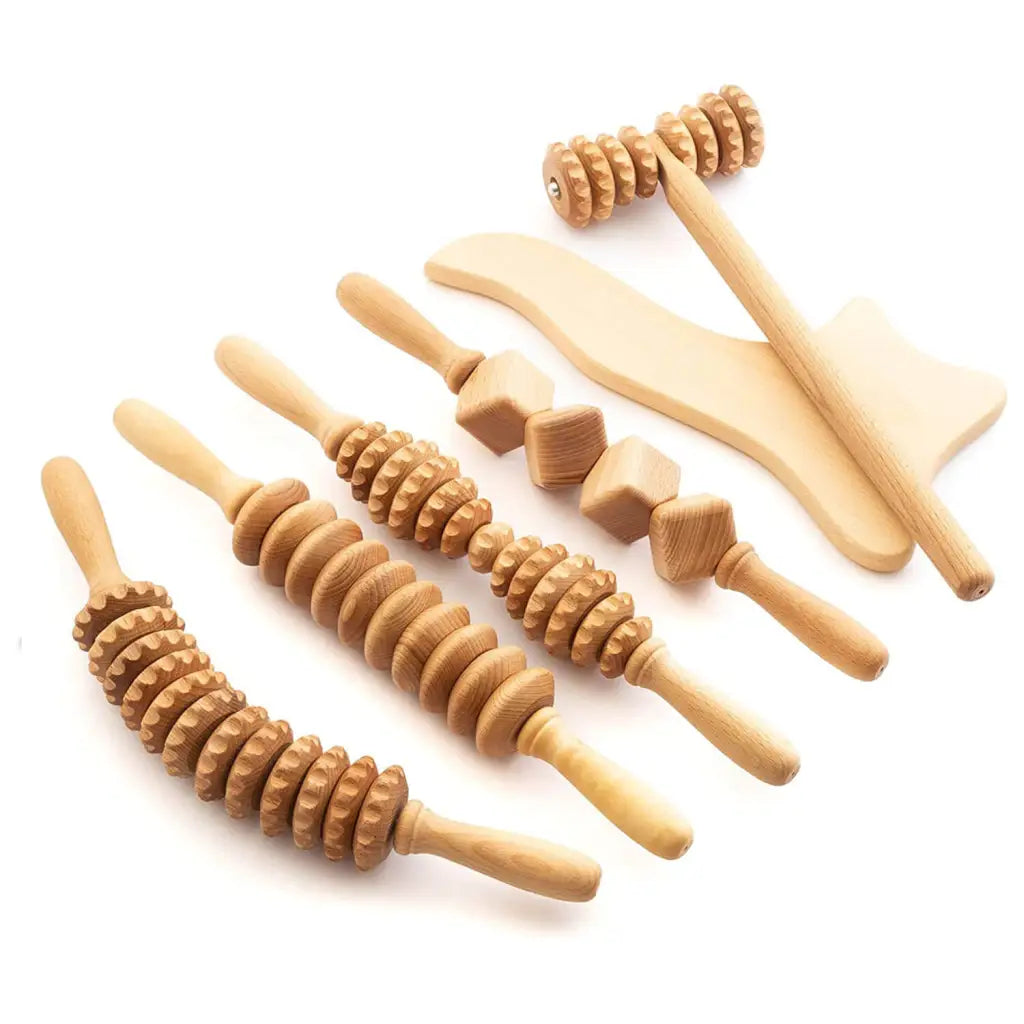
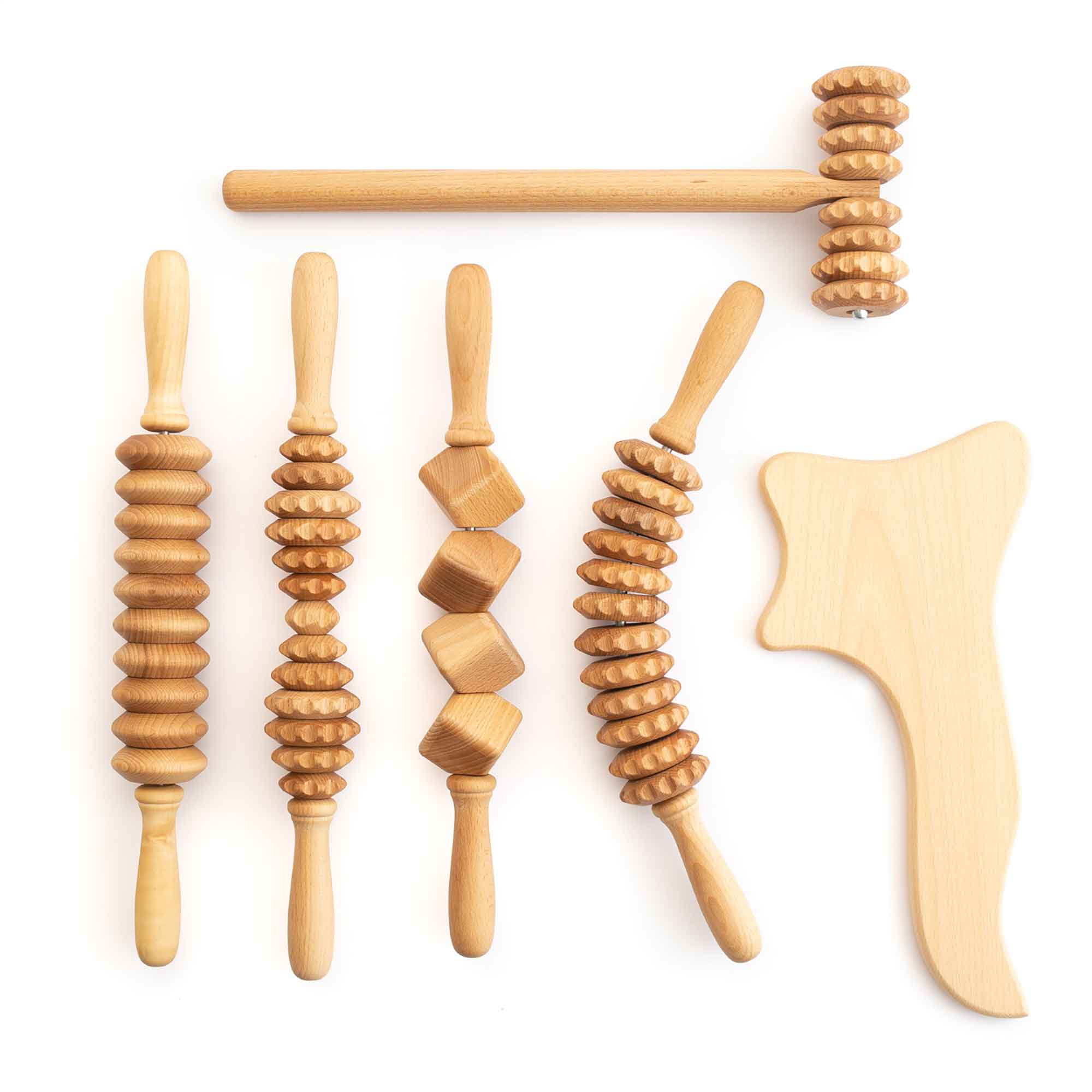
Different shapes solve different handling problems. A straight roller is suited to broad, reachable areas, a rigid curved roller follows rounded areas more closely, and a rope back massager helps with reach. These tools can support a comfortable self-massage routine, but they are not medical treatments and should not be presented as a guaranteed way to change tissue, body shape or appearance.
At a glance: which format fits your main need?
| Your main need | Start with | Why | Not ideal when |
|---|---|---|---|
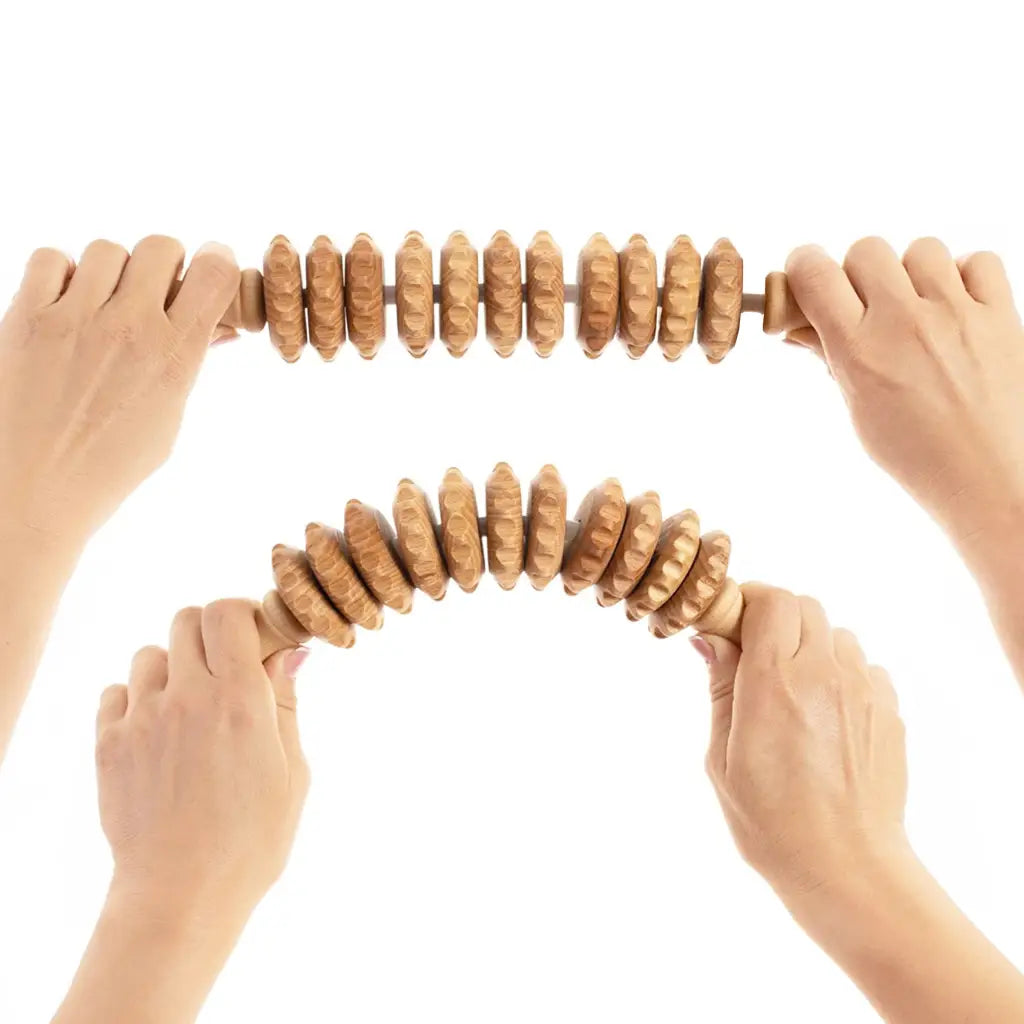
| Broad, reachable areas such as thighs, calves, glutes and arms | Straight 40 cm roller | Simple two-hand control and broad contact | Reaching across the whole back is the priority |
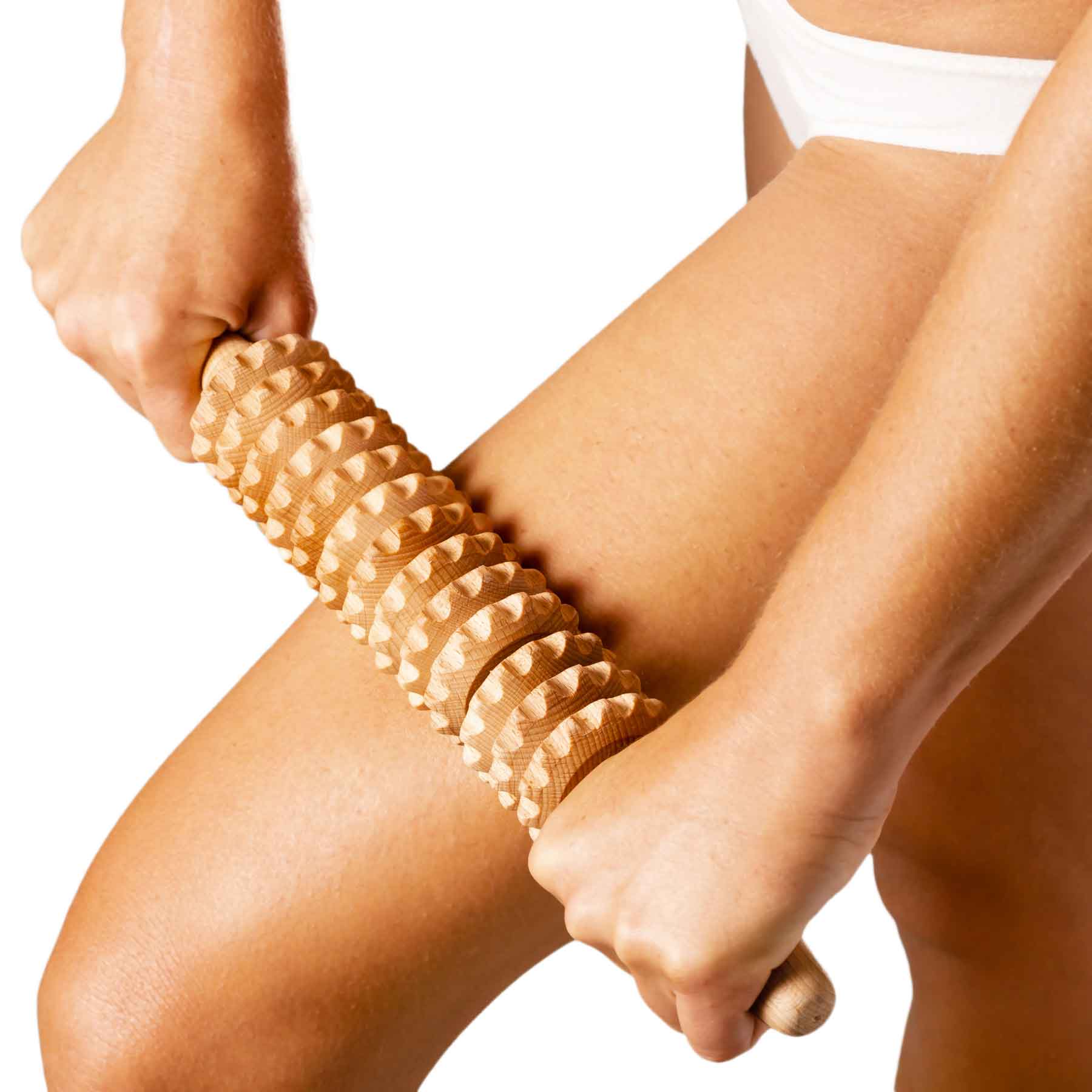
| Rounded areas such as thighs, hips and glutes | Rigid curved 40 cm roller | The curve maintains contact around a rounded area | You expect the frame to bend or flex |
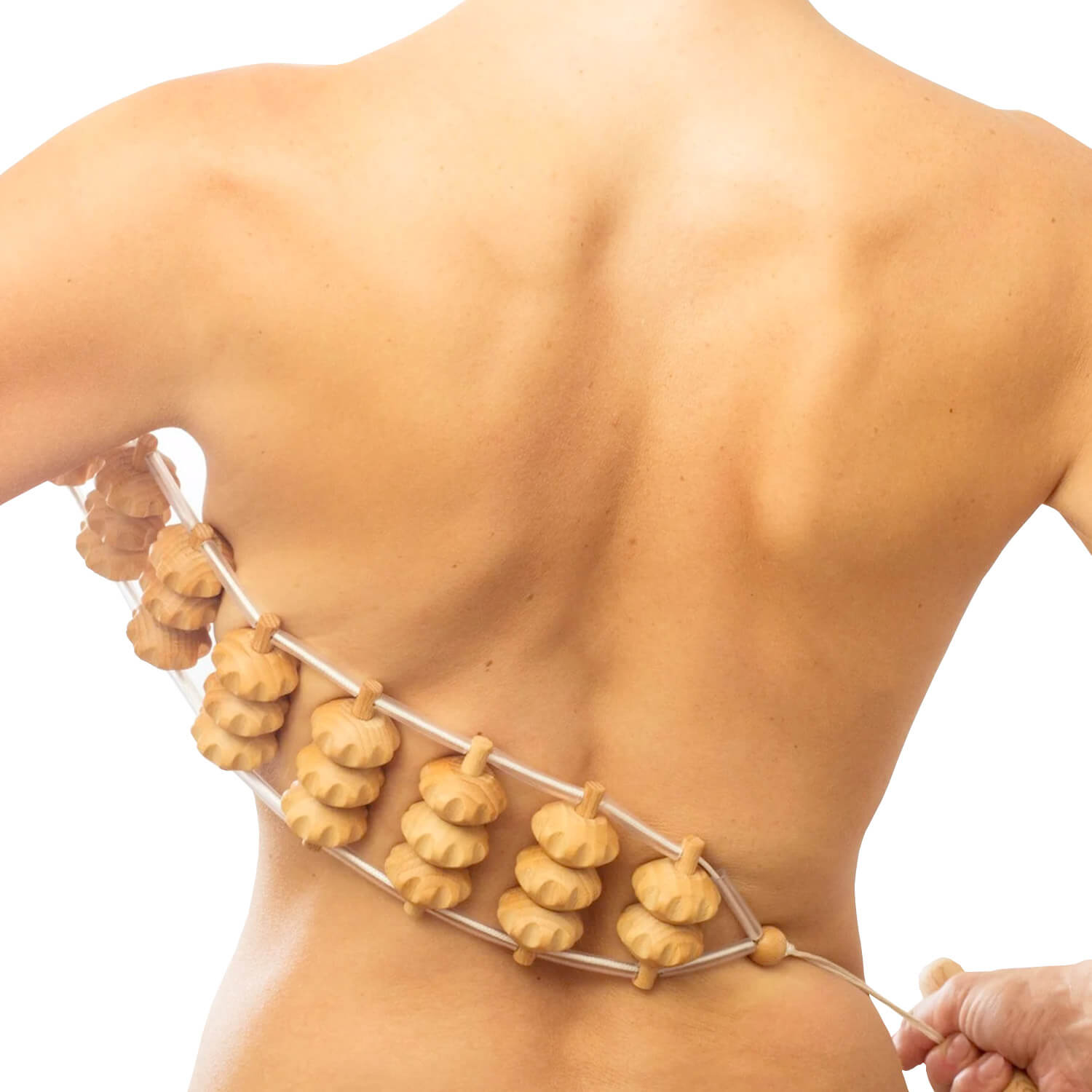
| Upper, mid or lower back reach | 120 cm rope back massager | Long handles solve the reach problem | You want the precision of a short handheld frame |
| A soft, compressible surface | Foam roller or softer alternative | Foam compresses under body weight | You want a small handheld tool |
| Powered movement | Electric massager | A motor creates movement for you | You prefer direct hand control and no charging |
The strongest-looking texture is rarely the best starting point. Choose by body area, reach, handling and the type of contact you prefer.


Why trust this guide?
This guide combines published evidence with what we have learned through manufacturing, manual quality checks, customer support and product returns.
- Tuuli makes its wooden massage rollers in Slovenia from locally sourced beechwood.
- The wooden components are machine-shaped, then hand-oiled, hand-inspected and hand-assembled.
- Product facts and dimensions were checked against current Tuuli product data.
- Buying guidance uses recurring customer questions and return patterns, not only keyword research.
- External studies are used only within their actual device and evidence limits.
- Safety, use guidance and evidence wording were reviewed by massage therapist Gorazd Slavinec.
Key facts about wooden massage rollers
- Wood remains firm and does not compress like foam.
- Shape changes contact, handling and reach.
- A curved wooden frame is not necessarily flexible. Tuuli's curved 40 cm roller is rigid.
- Pressure should remain comfortable and controllable. Bruising is not a sign of better use.
- A wooden roller supports self-massage. It is not a treatment for pain, cellulite, circulation or lymphatic conditions.
What is a wooden massage roller, and how does Tuuli make it?
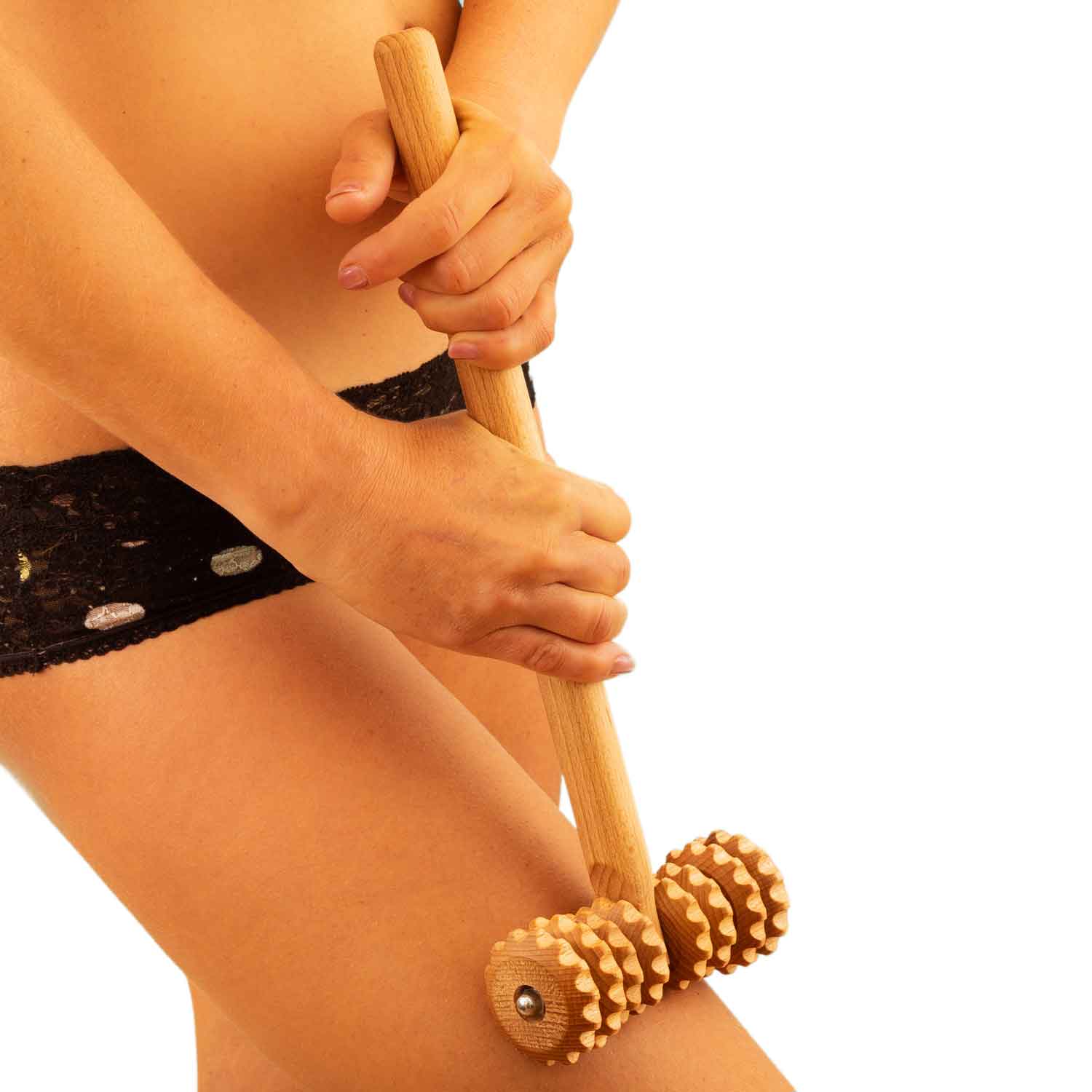
A wooden massage roller is a hand-powered tool with rotating wooden elements. You create the movement, direction and pressure. There is no motor or fixed intensity.
Tuuli makes its full-size rollers in Slovenia from locally sourced beechwood. We use beech because it can be shaped cleanly, is locally available and is part of the region's woodworking tradition. The components are machine-shaped, then oiled and assembled by hand.
Every wooden component is inspected manually. Parts with visible defects are rejected. During assembly, the team checks the surface, looks for damage and confirms that the rollers move as intended before the product is completed.


What manufacturing and customer feedback have taught us
- Curved does not mean flexible. Return comments show that some buyers expected the curved frame to bend. Tuuli's curved 40 cm frame is rigid.
- Reach can matter more than texture. A strongly textured tool is not useful if you cannot guide it over the intended area.
- Size and format are not interchangeable. Some returns come from choosing the wrong shape or expecting a large roller to suit a smaller or harder-to-reach area.
- Harder pressure is not automatically better. Comments about discomfort or bruising reinforce the need to start lightly and keep pressure controllable.
- Surface quality and movement matter. Rough areas, splinters, visible damage or rollers that do not move smoothly are reasons not to use the tool.
- Inspection is part of the product, not an afterthought. During hand assembly, Tuuli checks the wooden components, surface smoothness, visible condition and roller movement. Parts with visible defects are rejected.
These are first-party manufacturing, support and return insights. They help explain product choice and quality checks, but they are not clinical evidence.
What are the practical benefits of a wooden massage roller?
| Practical feature | What it means in use | Important limit |
|---|---|---|
| Manual pressure control | You control pace, direction and pressure with your hands | Harder pressure is not automatically more useful |
| Non-electric operation | No charging, batteries, app or power outlet | You create all movement yourself |
| Broad-area contact | Full-size rollers can move across larger reachable areas | A large rigid tool is less precise on small or hard-to-reach areas |
| Shape-specific handling | Straight, curved and rope formats change contact and reach | Shape changes handling, not a guaranteed physical result |
| Simple setup | The tool is ready without machine settings | Wood still needs cleaning, drying and inspection |
The clearest benefit is control. You can begin gently, change the angle and stop immediately.
Do wooden massage rollers actually work?
Yes, for their basic mechanical job. They let you move hand-controlled rolling pressure across a suitable area without settings or charging. That practical function is not proof of a medical effect.
Research on foam rollers and roller massage bars has reported some short-term effects in selected exercise settings, including changes in range of motion or perceived post-exercise soreness. Results and protocols vary. Foam rollers, massage sticks and rigid wooden rollers are different devices, so those studies cannot establish a unique clinical benefit for a wooden roller or any specific Tuuli product.
For broader context, see the 2015 systematic review, 2019 meta-analysis and 2020 review and meta-analysis.
A realistic expectation is a controllable manual routine, not pain treatment, circulation or lymph claims, cellulite removal, fat loss or permanent body change.
What should you compare before buying?
- Body area: Decide whether the main use is a broad reachable area, a rounded area or the back.
- Reach: Check whether you can hold and move the tool comfortably where you plan to use it.
- Shape and rigidity: Confirm whether the frame is straight, rigidly curved, articulated or rope-based.
- Dimensions: Compare the measurements with your intended body area, grip and storage space.
- Contact feel: Ribbed wood creates firm contact. It will not feel like compressible foam.
- Surface and movement: Check for rough areas, cracks, splinters, loose parts, wobble or restricted movement.
- Care: Choose a tool you are willing to wipe, dry and store away from prolonged moisture.
Our support experience points to one rule: choose the tool you can control on the area you intend to reach. A larger set or stronger texture is not automatically better.
Straight vs curved vs rope: which wooden roller should you choose?
| Tool | Verified format | Best fit | Main limitation |
|---|---|---|---|
| Straight Beechwood Massage Roller 40 cm | 40 x 5 x 5 cm, about 350 g | Broad areas such as thighs, calves, glutes, arms and reachable upper-body areas | The rigid straight frame does not follow rounded areas as closely and is difficult to guide across the whole back |
| Curved Beechwood Massage Roller 40 cm | 40 cm along the curve, about 37 x 12 x 5 cm, about 350 g | Rounded areas such as thighs, hips and glutes | The frame is rigid, not flexible, and the contact can feel too focused for some users |
| Beechwood Rope Back Massager 120 cm | 120 x 7 x 3 cm, about 350 g | Upper, mid and lower back reach using two long handles | Less precise than a short handheld frame and not ideal for users who dislike rope handling |


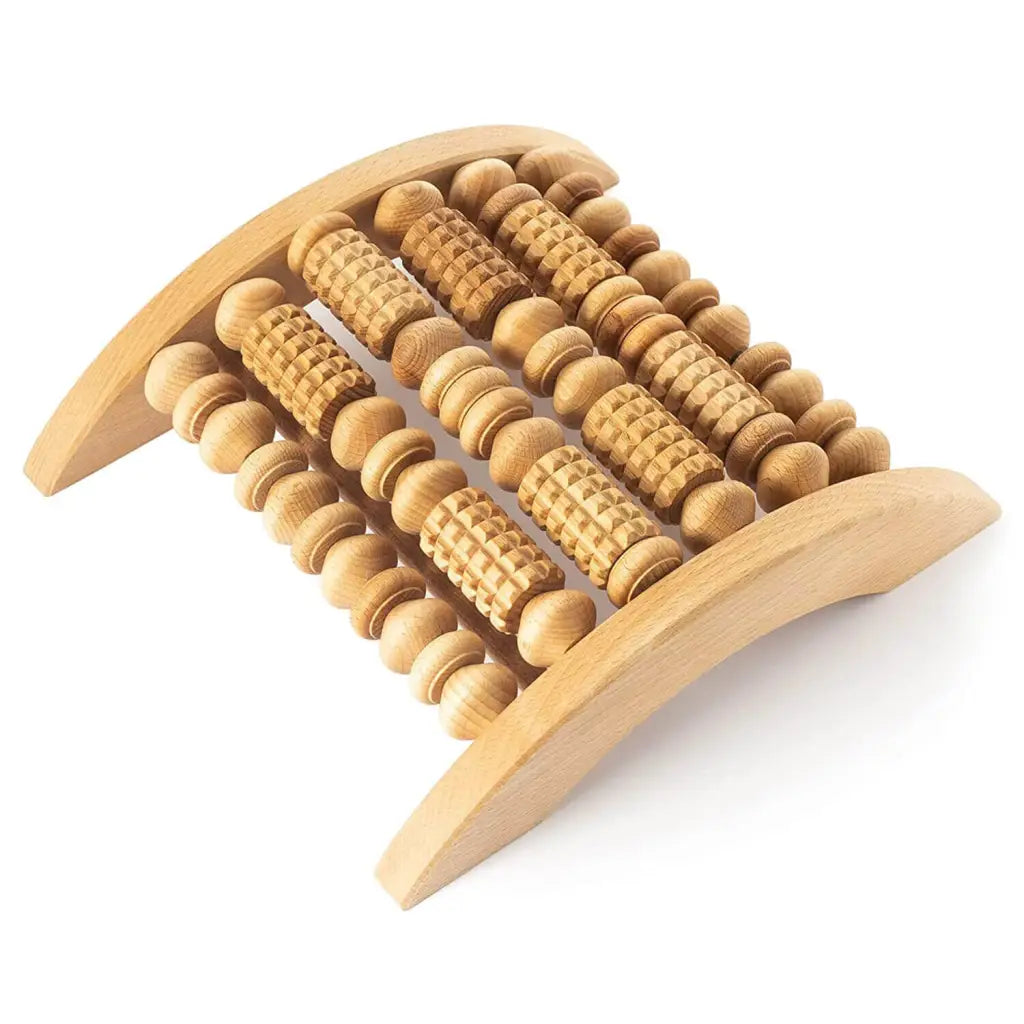
For foot tools, small handheld shapes, paddles, rollers and sets, see Types of Wooden Massage Tools.
See how wooden massage tool types differ
This short overview shows several Tuuli wooden massage tool formats. Use it to compare shape, grip and reach before choosing a specific roller or massager.
Which manual massage roller is best for at-home self-care?
For many beginners, a straight 40 cm roller is the clearest first format because both hands guide it and it covers several broad areas. Choose a curved roller for rounded areas, a rope tool when back reach is the problem, or a smaller tool for one specific area. The best first tool is the simplest one that matches the intended use.
Wooden vs plastic, foam and electric massagers
| Format | How pressure is created | Practical reason to choose it | Main trade-off |
|---|---|---|---|
| Wooden handheld roller | Your hands move a firm, rigid or articulated tool | Direct control, quiet operation and a solid contact feel | Requires dry wood care and manual effort |
| Plastic handheld tool | Your hands move a tool whose weight, texture and flexibility vary by design | Often lightweight, with many moulded shapes | Material feel and build quality vary widely |
| Foam roller | Body weight presses against a compressible cylinder, usually on the floor or wall | Broad rolling over larger areas | Requires body positioning and balance and is not a handheld format |
| Electric massager | A motor provides vibration, rotation or percussion | Less repeated hand movement and powered settings on some models | Requires power or charging and creates a different type of control |
No format is universally better. Choose by body area, preferred pressure source, handling, maintenance and whether you want manual or powered movement.
How should a beginner start safely?
This is a short product-safety start, not a treatment protocol.
- Inspect the tool. Do not use it if the wood is cracked, splintered, rough, loose or damaged.
- Choose one suitable area. Begin with a short trial of a few minutes rather than a long full-body routine.
- Start with light pressure. Move slowly and keep the roller moving. Increase pressure only within a comfortable range.
- Avoid unsuitable areas. Do not press directly over the spine, joints, bones, open or irritated skin, fresh bruises, painful or numb areas, unexplained swelling or raised veins.
- Stop for warning signs. Stop if use causes sharp pain, numbness, unusual sensitivity, skin irritation or bruising.
People with a health condition, recent surgery, unexplained symptoms or uncertainty about massage should ask a qualified healthcare professional whether self-massage is suitable. The NCCIH massage safety overview notes that massage generally has few risks when used appropriately, while rare serious effects have been reported, especially with vigorous massage or increased-risk users.
For a full step-by-step routine, read How to Use a Wooden Massage Roller.
How do you clean a wooden roller and check its condition?
Wipe the tool with a dry or slightly damp cloth and remove permitted lotion or oil residue promptly. Let it dry fully. Do not soak it, leave it in prolonged moisture or put it in a dishwasher.
Before use, check the surface, handles, joins and moving parts. Stop if you find cracks, splinters, looseness, wobble or changed movement. Wood species alone does not prove a specific lifespan.
For a fuller discussion of trade-offs and care, read Wooden Massage Rollers: Pros, Limits and Care.
Common misconceptions
| Misconception | Why it is unreliable | Safer expectation |
|---|---|---|
| A curved roller must be flexible | Curved describes the frame shape, not whether the frame bends | Check the construction. Tuuli's curved 40 cm roller is rigid |
| Removes cellulite or fat | A manual roller cannot establish permanent tissue or body-composition change | Use it as a controllable self-massage tool, not a body-changing treatment |
| Improves circulation, lymph flow or detoxification | These physiological claims require suitable clinical evidence | Expect the direct mechanical action of hand-controlled rolling pressure |
| Treats pain, injury or a health condition | A consumer tool is not a diagnosis or treatment | Seek professional advice for persistent pain, injury or unexplained symptoms |
| Bruising proves it is working | Bruising can indicate excessive pressure or unsuitable use | Reduce pressure or stop; hard pressure is not required |
| One shape works for every area | Shape, reach, size and comfort differ by tool and user | Choose the design for the intended area and handling need |
For a focused evidence review, read Do Cellulite Rollers Work? Evidence, Safety and Realistic Expectations.
Frequently asked questions
Is a straight or curved wooden massage roller better?
Neither is universally better. A straight roller gives a familiar linear format. A rigid curved frame can maintain steadier contact on rounded areas such as thighs, hips and glutes. Choose by area, reach and comfort.
Can I use a wooden massage roller every day?
Some people prefer brief, gentle regular use, but daily use is not required. Reduce frequency or stop if the area becomes sore, irritated, numb or bruised.
How hard should I press?
Start lightly. Pressure should remain comfortable and controllable. Hard pressure and bruising are not signs that the tool is more effective.
Can I use a wooden roller before or after exercise?
Some people include gentle rolling in a warm-up or post-activity routine. This article does not prescribe a performance or recovery protocol. Keep pressure light, avoid painful or injured areas and stop if the area feels worse.
Can a wooden massage roller replace a foam roller?
Not exactly. A handheld wooden roller uses your arms to create pressure. A foam roller usually uses body weight against a compressible cylinder. Choose the format that suits your body position, balance and preferred contact.
Can a wooden roller get wet or be used with massage oil?
Use only a dry or slightly damp cloth for cleaning and do not soak the tool. Follow the product instructions before using oil. When allowed, apply it sparingly, wipe residue promptly and let the wood dry fully.
Can I use a wooden roller on my back by myself?
A short handheld roller can reach only parts of the back comfortably. A rope back massager is usually easier when upper, mid or lower back reach is the main problem. Keep pressure beside, not directly on, the spine.
Can a wooden massage roller remove cellulite?
No reliable evidence supports permanent cellulite removal, fat loss or body-shape change from a manual wooden roller. Treat those claims with caution.
When should I not use a wooden massage roller?
Do not use it over open or irritated skin, fresh bruises, bones, joints, the spine, painful or numb areas, unexplained swelling or raised veins. Ask a qualified professional before use if a health condition, recent surgery or unexplained symptom may affect safety.
Specialist review

Reviewed by Gorazd Slavinec
Massage therapist at Spina masaža
Gorazd Slavinec has worked in massage practice since 2010. His work includes manual massage techniques and the practical use of different massage tools.
Review scope: Gorazd reviewed the complete article, with specialist attention to safe pressure guidance, use recommendations, contraindications, product handling and realistic non-medical evidence wording.
Review date: 24 July 2026
Professional profile | Spina masaža website | Facebook | Instagram
Product and manufacturing facts were checked against current Tuuli information. This article provides general product guidance and is not medical advice, diagnosis or treatment.

Written by Peter Čuček
Tuuli author bio
Tuuli blog and product-support content is prepared under the Tuuli editorial workflow and published by Peter Čuček, store owner of Tuuli, where applicable. The goal is to help customers choose, use, clean and store wooden products with accurate product facts, clear safety language and practical buying guidance.
Who writes Tuuli product-support and blog content?
Tuuli content is written and maintained by the Tuuli team, with product and brand context from Tuuli GmbH. Content focuses on real product details, materials, dimensions, care instructions, personalisation options, shipping, returns and customer support.
Editorial review process
- Product facts are checked against current Tuuli product information before publication.
- Internal links point to relevant products, collections, support pages and policy pages.
- Wooden massager and self-care content is reviewed for safe, non-medical wording.
- Selected wooden-massager and self-care pages include additional specialist content review where relevant.
Editorial focus
- Clear product fit: what the product is, who it is for and what is included.
- Material, dimensions, care and use guidance based on product information.
- Safe wording for wooden massagers and self-care tools.
- Internal links to relevant products, collections, instructions and support pages.
Contact and corrections
If a product detail, guide or support answer looks unclear or outdated, contact Tuuli at info@tuuli-shop.com. We review content updates against current product information and store policies.
Where to learn more
Learn more about Tuuli on the About page, check company details in the Impressum, browse the instructions page or visit the contact page if you have a product question.