Do Cellulite Rollers Work? Evidence, Safety and Realistic Expectations
If you have searched for cellulite rollers online, you have probably seen promises about breaking down fat cells, detoxifying the body or removing cellulite naturally. The reality is more nuanced. Wooden rollers can be useful manual self-care tools, but current evidence does not support permanent cellulite removal.
Why this guide exists: We created it because many online articles and product pages make promises that current evidence does not support. Our goal is to explain what a wooden massage roller can realistically do, what it cannot promise and what buyers should consider before choosing one.
Do wooden cellulite rollers actually work? Quick answer
Quick answer: A manual wooden cellulite roller, including a beechwood roller used for maderotherapy or wood therapy, can provide controlled self-massage and may leave the skin feeling or looking temporarily smoother for some people. It cannot remove cellulite, break down fat cells or promise permanent body change. Direct clinical evidence for at-home wooden rollers is limited, so the right goal is a comfortable self-care routine with realistic expectations.
Key takeaways
- Cellulite is linked to the structure of the skin, connective tissue and underlying fat, not to a problem that a hand-held roller can simply break up.
- Some studies of professional mechanical massage devices report temporary changes in cellulite appearance, but those devices are not the same as a manual wooden roller.
- No robust evidence shows that a home wooden roller permanently reduces cellulite.
- Choose a tool by movement, grip and pressure control, not by body-change promises.
- Use light to moderate pressure. Bruising, numbness, swelling or pain are reasons to stop.
What is cellulite?
Cellulite is the dimpled or uneven skin appearance most often seen on the thighs, hips and buttocks. Current clinical reviews describe it as a complex structural issue involving the dermis, which is the supportive layer below the outer skin, fibrous connective-tissue bands and subcutaneous fat, meaning fat stored just under the skin. It is common, cosmetic and not a sign that the body is unhealthy.
The skin is commonly described as having an outer epidermis, a supportive dermis and deeper subcutaneous tissue. See the NCBI overview of skin anatomy.
This structure matters because a massage roller acts from the outside. It can apply pressure and move across the skin, but it does not cut or permanently release the fibrous bands that contribute to visible dimpling. A 2023 clinical review concluded that cellulite remains difficult to treat and that many available improvements are unpredictable or short lived. Read the clinical review in Aesthetic Surgery Journal Open Forum.

What results can you realistically expect from a cellulite roller?
The answer depends on the result you expect. A roller can provide controlled massage, but it should not be treated as a permanent cellulite treatment.
| Expected result | Realistic answer |
|---|---|
| Controlled self-massage | Yes. A roller gives you a repeatable manual movement and lets you control pace and pressure. |
| Temporary smoother feel or appearance | Some people may notice a temporary smoother feel or appearance after massage, but the effect is not proven to last. |
| Permanent cellulite removal | No. A manual wooden roller should not be sold or bought with this expectation. |
| Breaking down fat cells | No reliable evidence supports this claim for a home wooden roller. |
| Detox or guaranteed lymphatic drainage | These are not appropriate product promises for a manual wooden massager. |
Is there scientific proof that cellulite rollers work?
No clinical evidence shows that a manual wooden roller permanently reduces cellulite. Most research examines professional devices or other treatment methods, not simple wooden rollers used at home.
- A broad evidence review found that many cellulite treatments had limited or inconsistent evidence, with no well-established long-term solution. See the evidence-based review on PubMed.
- A comprehensive literature review also found that an effective long-term treatment had not been established across the available treatment categories. See the comprehensive review on PubMed.
- One small study of an electro-mechanical massage device reported measurable smoothing after repeated treatment, but the effect gradually reversed after treatment stopped. The device and treatment schedule were very different from a hand-held wooden roller. See the mechanical massage study on PubMed.
- A small study of manual lymphatic drainage found that it was safe but not effective as a stand-alone cellulite treatment. See the study on PubMed.
Cleveland Clinic also notes that hand-held massage devices, foam rollers and cellulite rollers have not been shown to improve the long-term appearance of cellulite. Read the Cleveland Clinic overview of cellulite.
Mayo Clinic describes the improvement reported with mechanical massage devices as slight and short lived. This supports the need to distinguish clinic devices from a hand-held wooden roller used at home. Read the Mayo Clinic treatment overview.
What this means for a buyer: Evidence from a professional machine, a clinic procedure or a different massage method cannot be transferred directly to a Tuuli wooden roller. Use the roller as a manual wellness tool. Do not expect permanent cellulite reduction or a medically proven treatment effect.
Is maderotherapy a medical treatment?
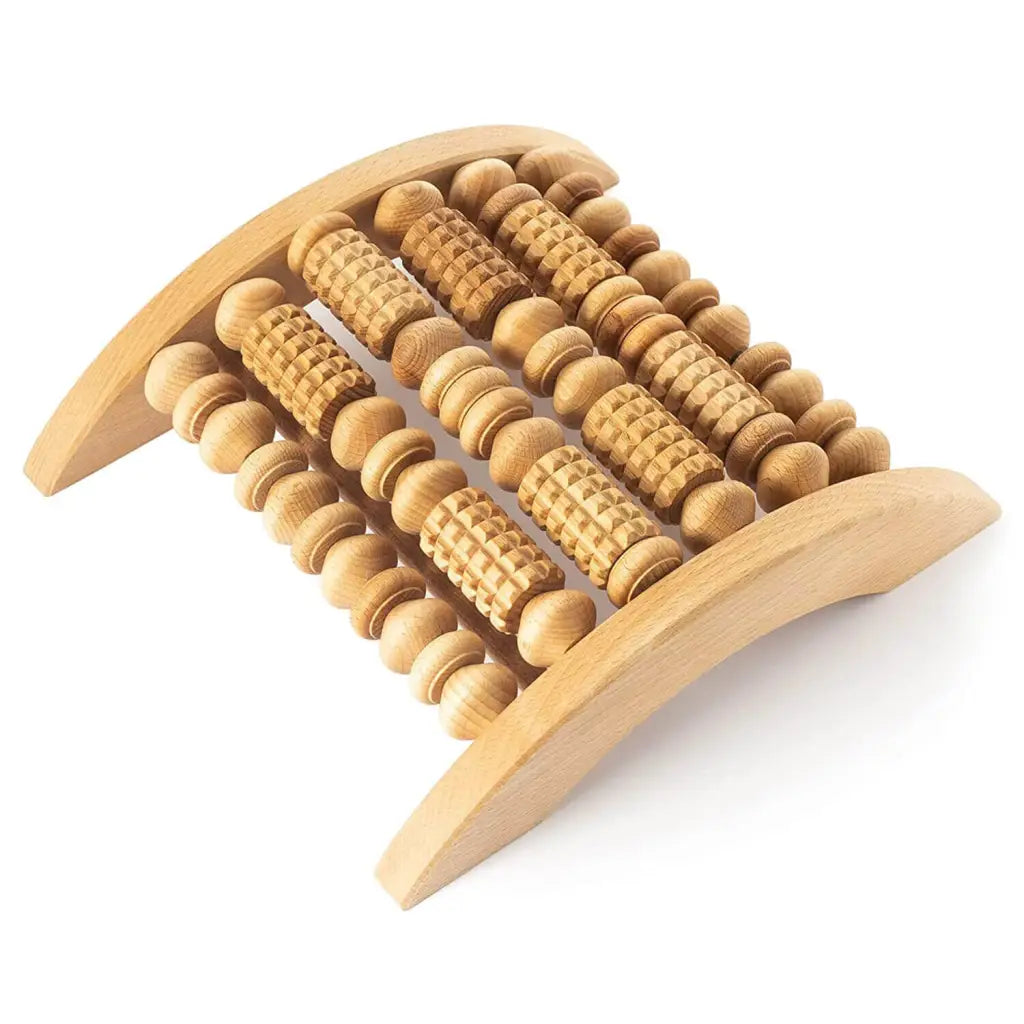
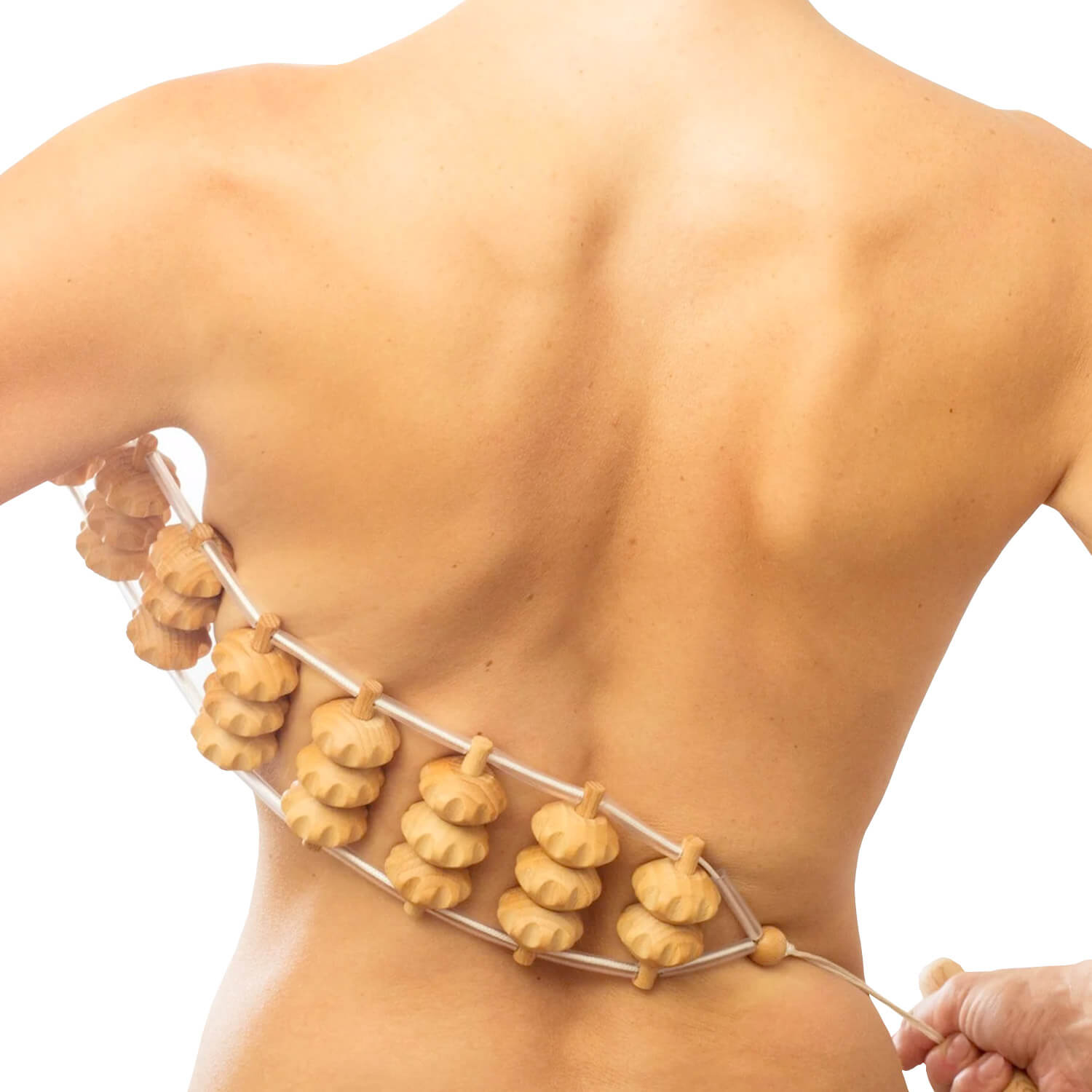
No. Maderotherapy, also called wood therapy, is a manual massage approach that uses wooden rollers, solid body paddles, cups and other shaped tools. It is not a standardised medical treatment. Tool shapes, pressure, techniques and session protocols vary widely.
Direct clinical research on home maderotherapy tools is sparse. Claims about permanent cellulite reduction, fat breakdown, detoxification or lasting body sculpting go beyond the evidence available for manual wooden tools.
What did we learn from 265 Tuuli customer reviews?
We reviewed 265 published customer reviews across four relevant Tuuli products: the curved roller, straight roller, body gua sha paddle and 6-piece massage set.
Repeated practical themes included tool shape and handling, use on thighs and other rounded areas, how much pressure to apply, and whether oil or lotion helps the tool move more comfortably. These themes helped shape the pressure guidance, tool-comparison section and product-selection advice in this article.
Important: Customer reports about cellulite, circulation, pain or other outcomes are personal experiences. We do not treat them as clinical evidence or guaranteed product results.
Practical questions that repeatedly appear
- Should I choose a straight or curved roller for thighs and other rounded areas?
- How much pressure should I use when starting?
- Should I apply body oil or lotion before using the tool?
Why Tuuli wooden rollers are made this way
Tuuli massage tools are made in Slovenia from solid European beechwood sourced in Slovenia.
Beechwood is used because it is easy to shape and smooth, has suitable hardness and can be finished with a smooth wooden surface. Local sourcing also keeps the material supply close to production and reflects Slovenia's long woodworking tradition.
The products are assembled, inspected, engraved when required, oiled and packed by hand. They are finished with mineral oil for a smoother wooden surface.

Construction and movement
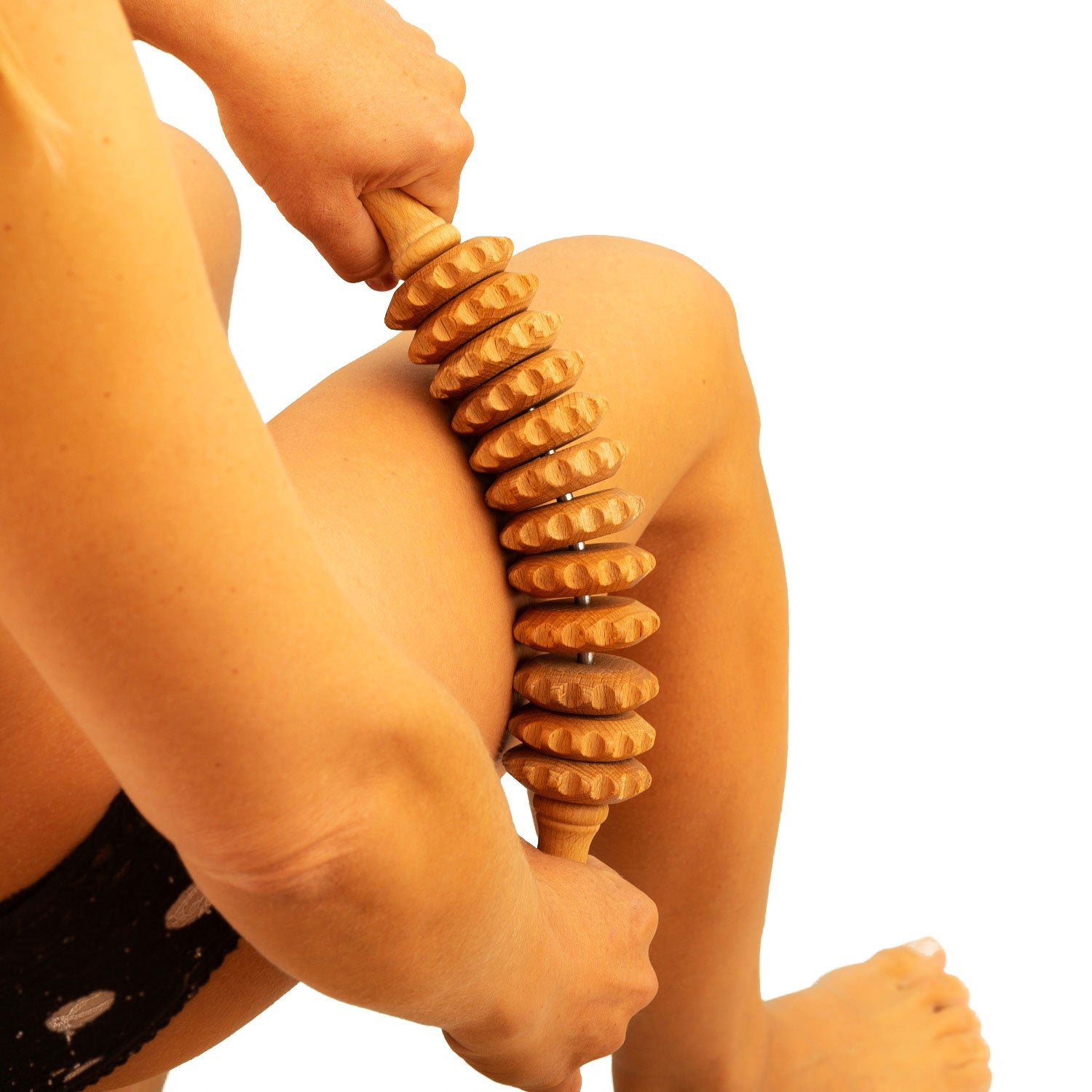
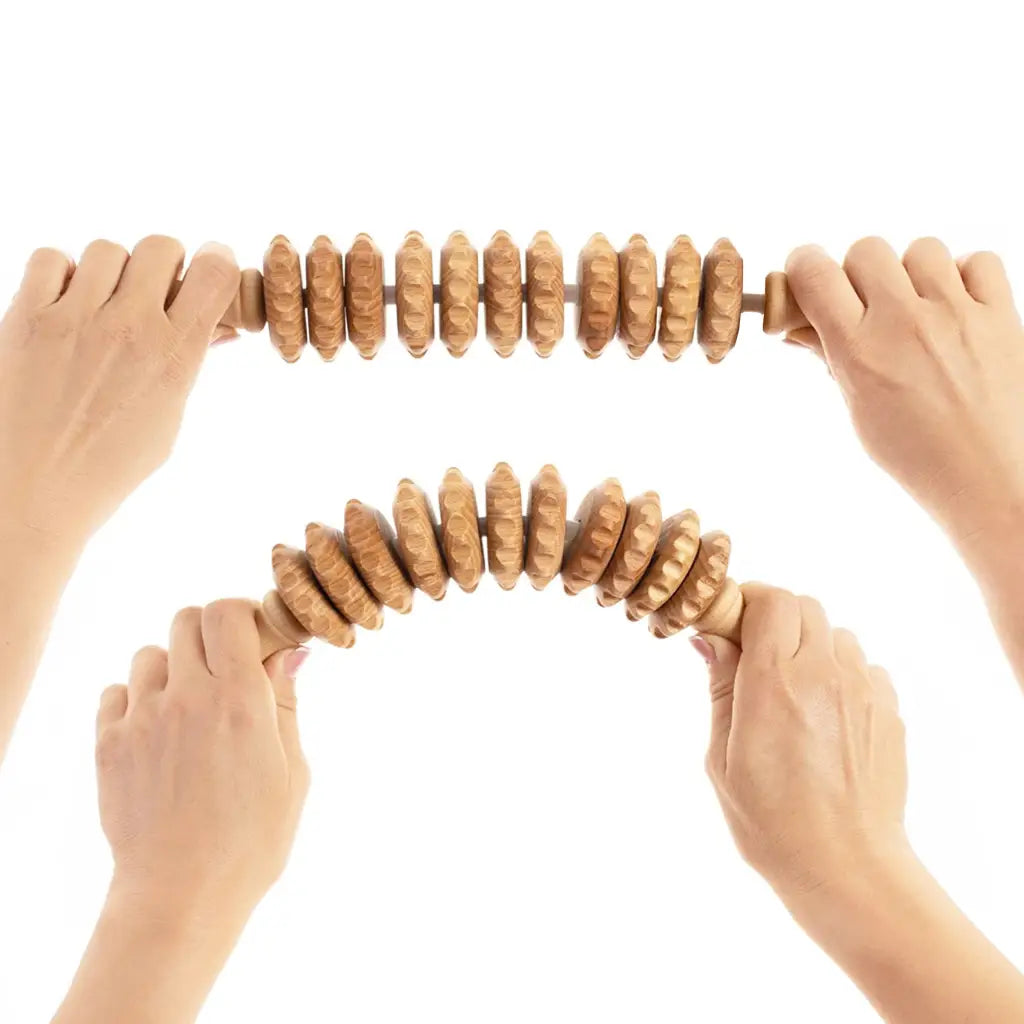
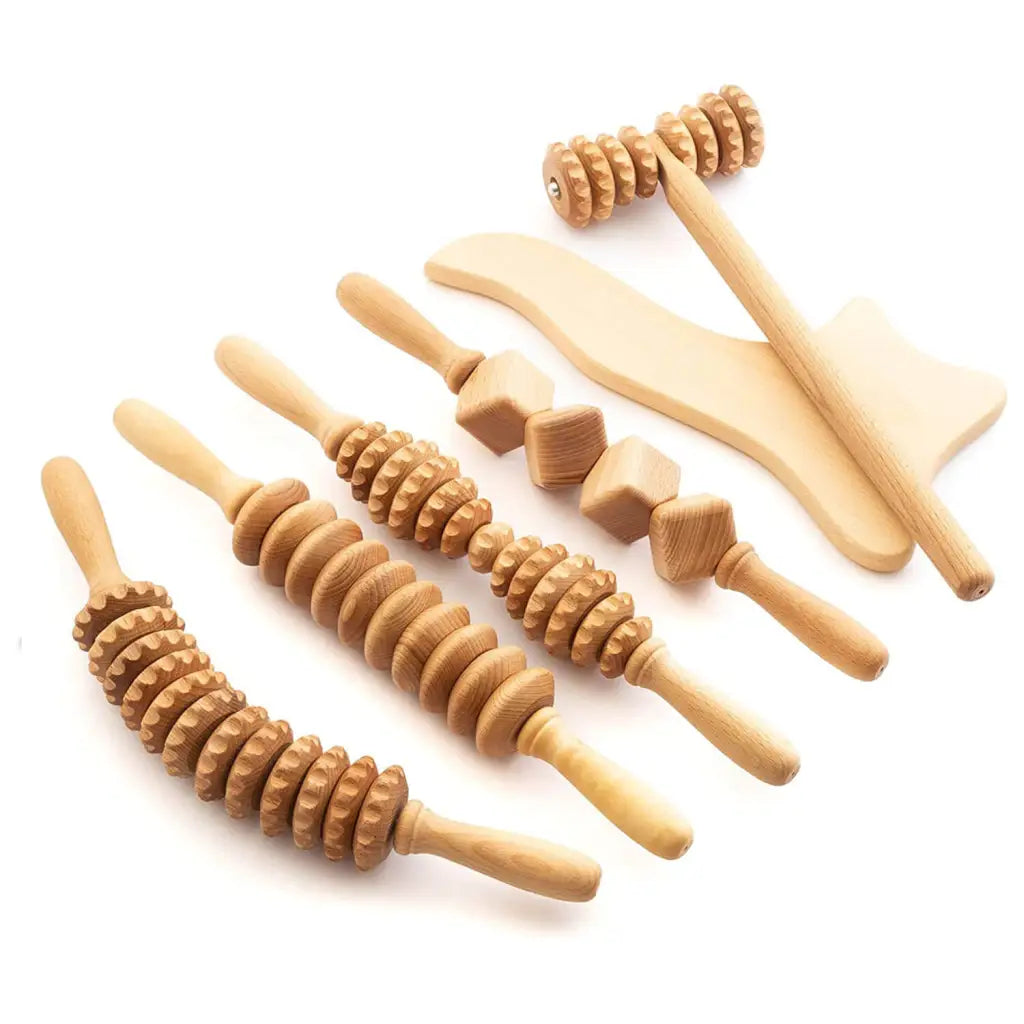
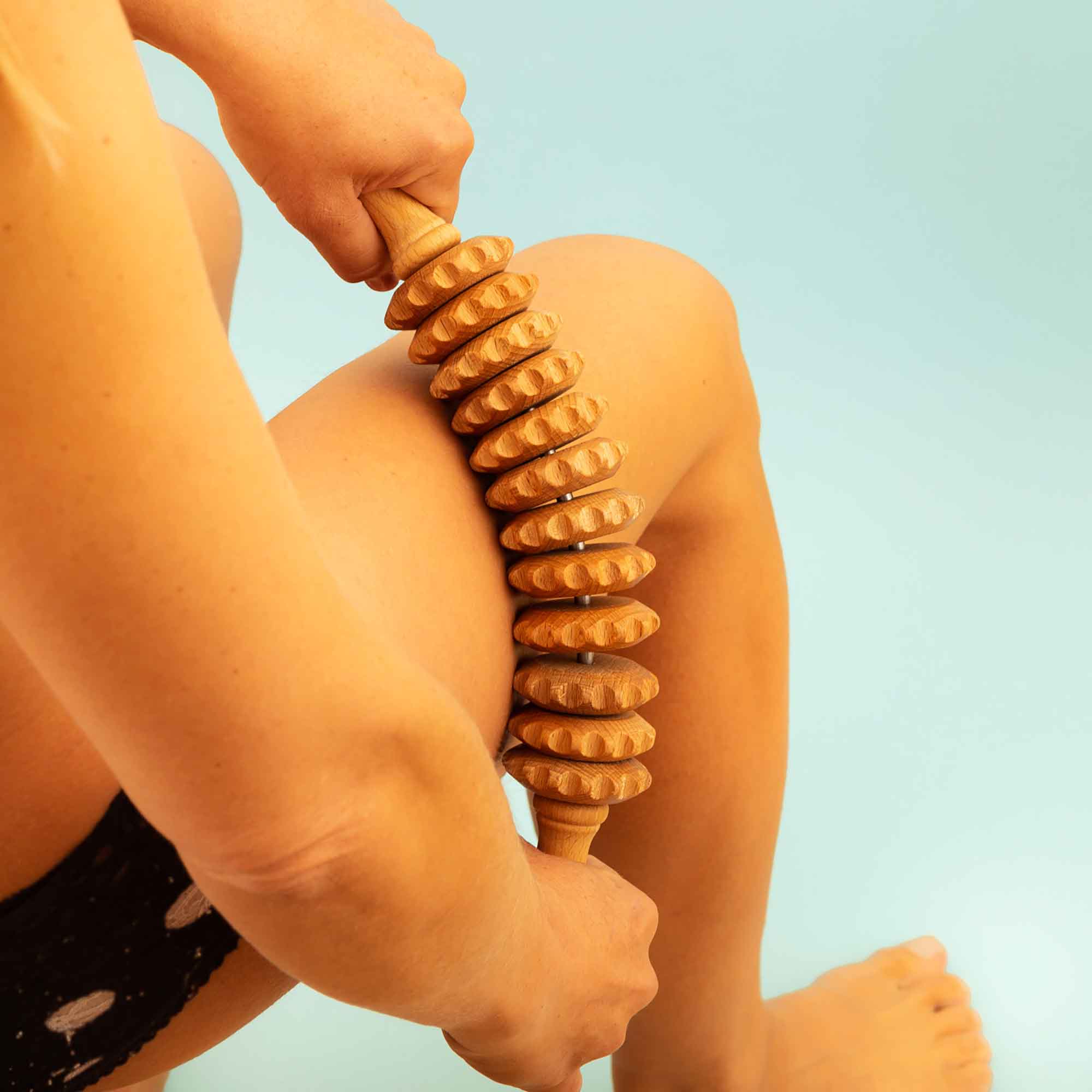
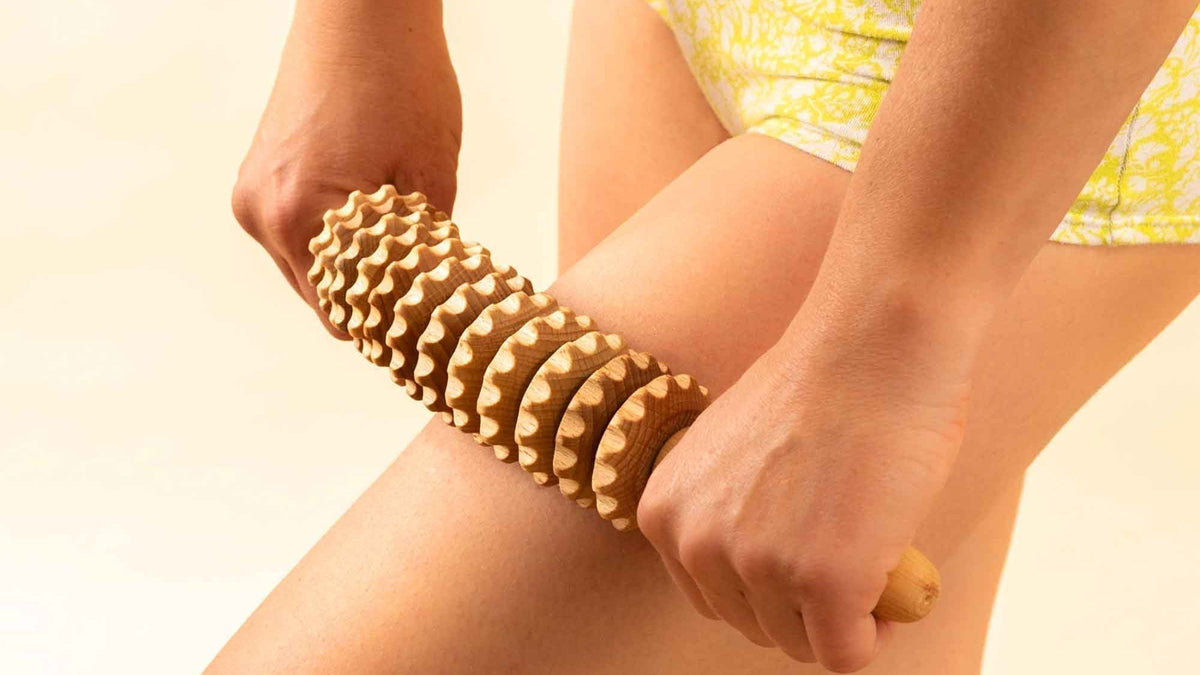
- Curved and straight rollers: each has 12 freely rotating wooden roller elements on a metal bar. The handles are fitted onto the same metal bar.
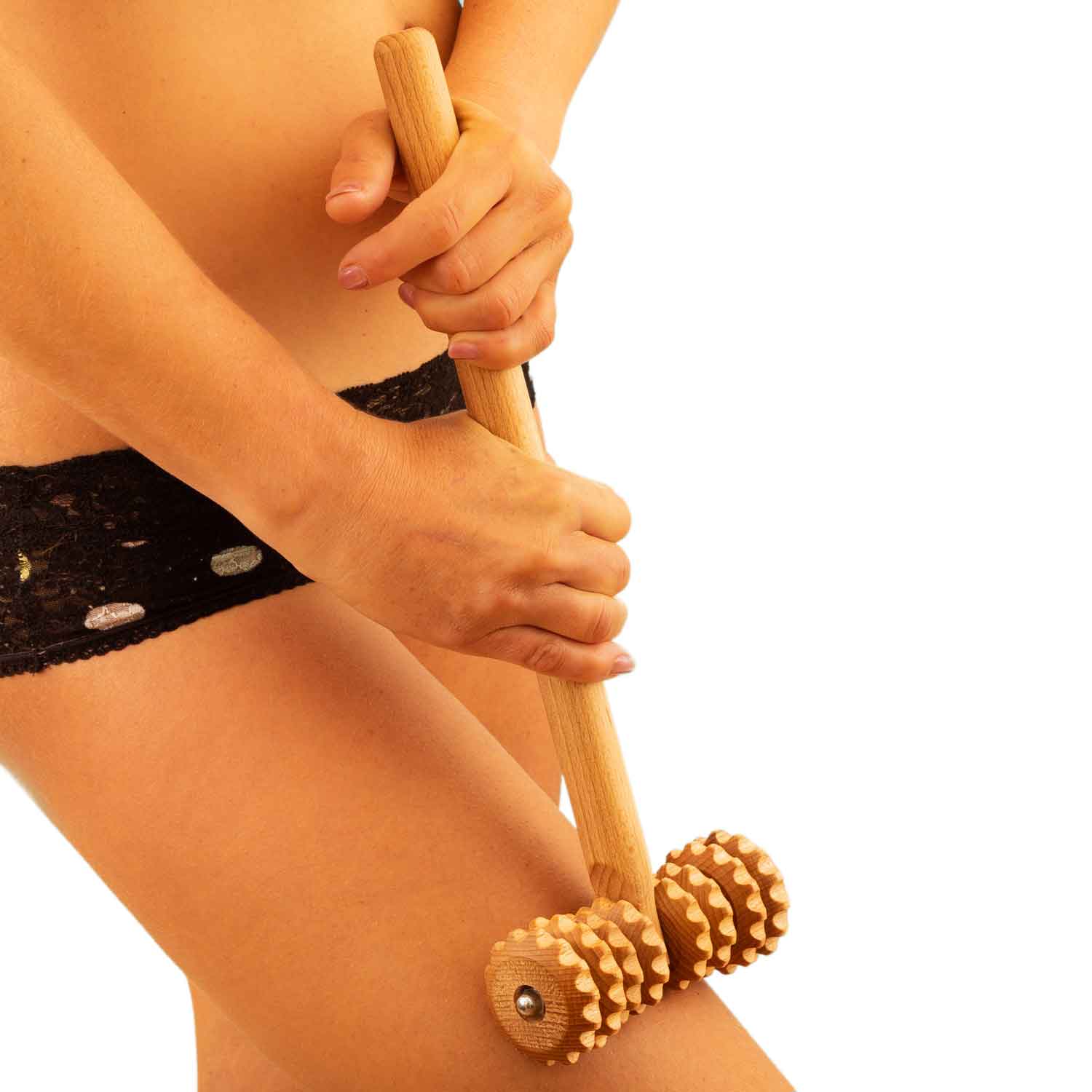
- T-massager: includes 8 freely rotating wooden roller elements.
- Oval roller: includes 13 freely rotating wooden roller elements.
- Disk roller: includes 10 freely rotating wooden roller elements.
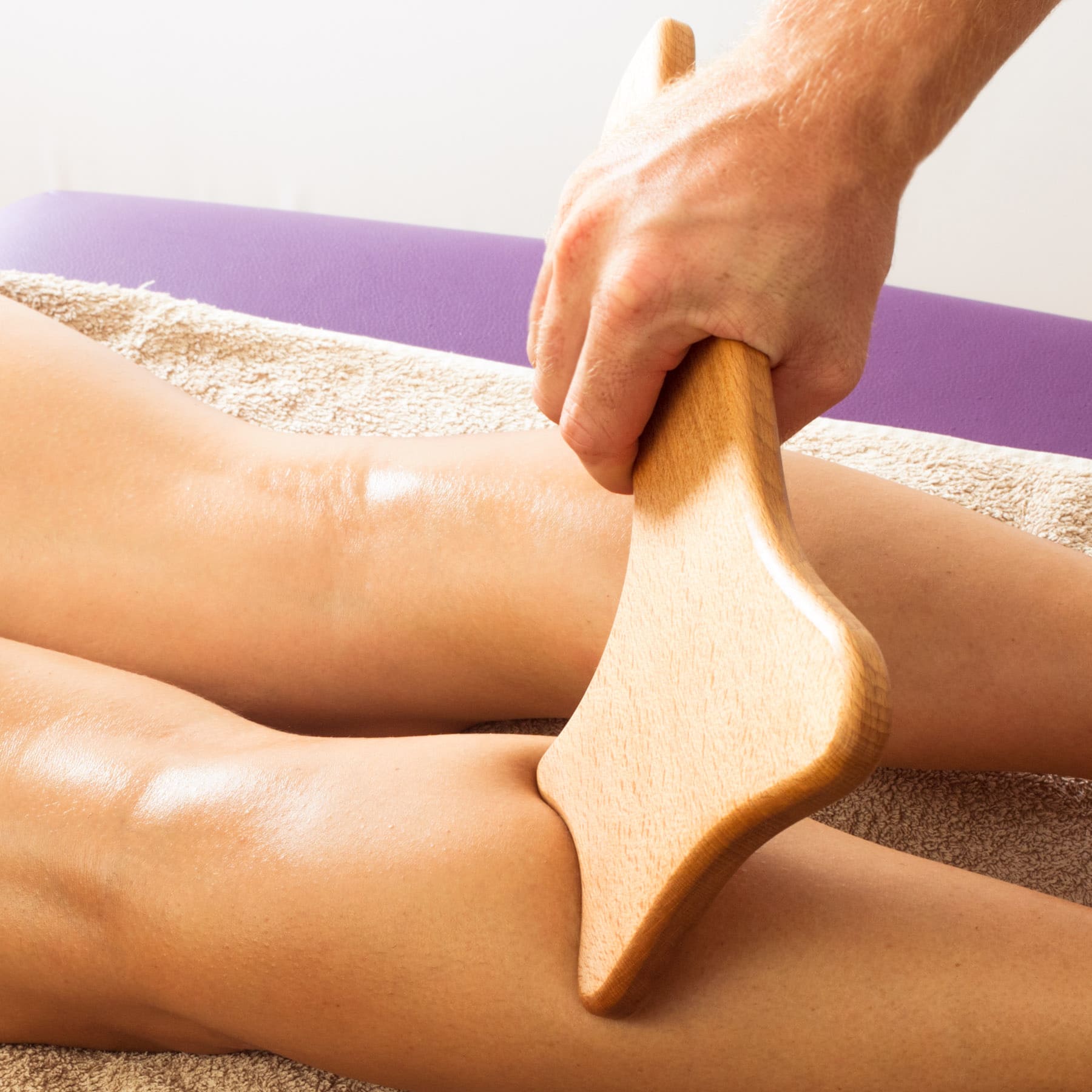
- Body gua sha paddle: a solid, hand-guided wooden paddle used for gliding strokes. Unlike a roller, it has no metal bar or moving roller elements.
Why the shapes differ
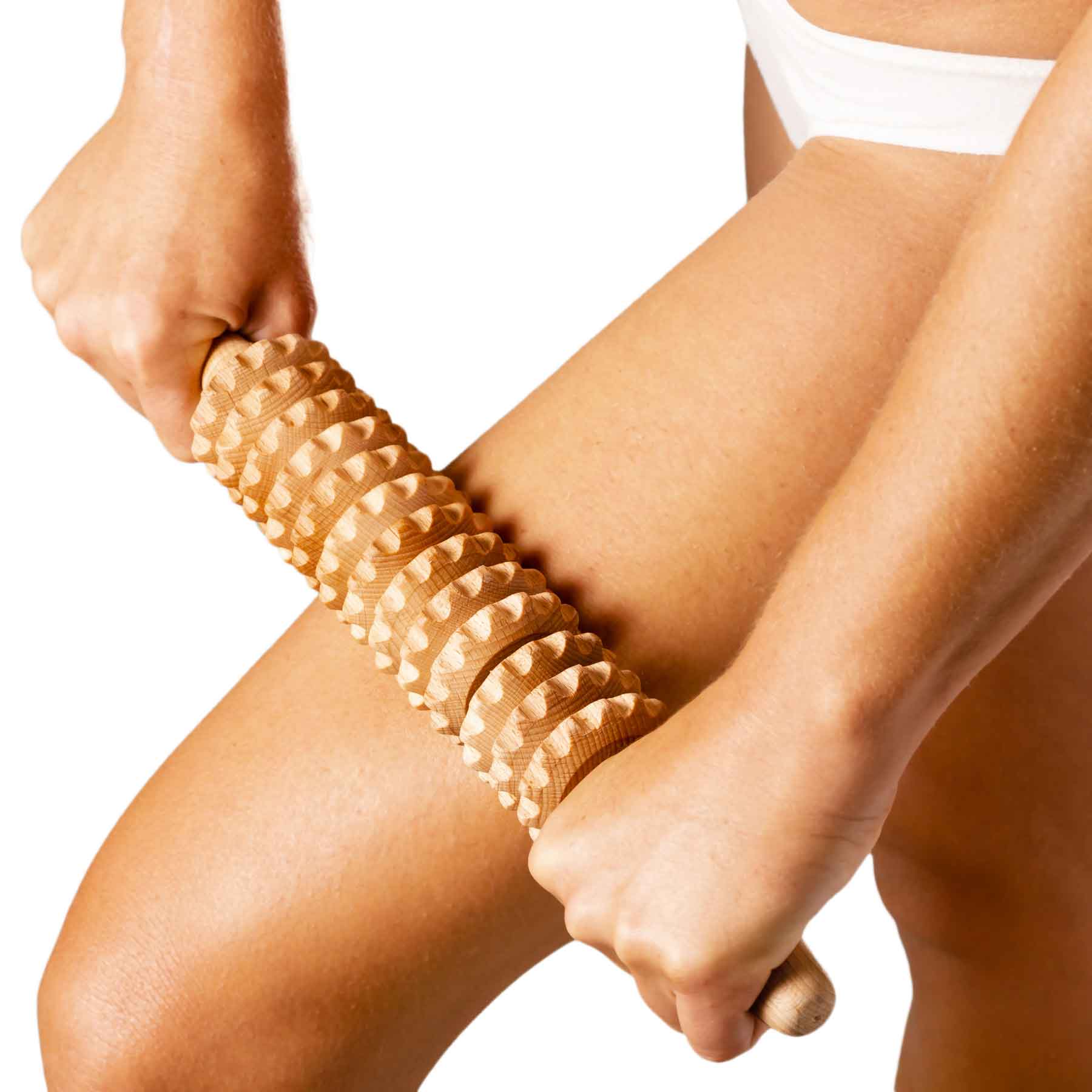
- Curved frame: follows rounded body areas such as thighs, hips, glutes and calves more naturally.
- Two-handle design: provides a steadier grip and makes it easier to control direction and applied pressure.
- Straight roller: supports a familiar, repeatable rolling movement.
- Body paddle: is designed for slow gliding strokes rather than rolling movement.
Individual quality inspection
Every product is inspected before packing. The inspection checks for cracks, splinters, sharp edges, surface smoothness, correct roller movement, handle stability, surface damage, correct dimensions and complete set contents. Products that do not pass inspection are removed and destroyed.
Tuuli does not assign a fixed service-life limit to these tools. With correct care and no structural damage, a tool can remain in use. Inspect it regularly and stop using it if the wood becomes cracked, splintered, loose or otherwise damaged.
Which wooden tool should you choose?
Start with the movement you want and the areas you can reach comfortably. More pieces do not automatically make a set more effective.
| Buyer need | Tool type | Key construction | Why it may fit |
|---|---|---|---|
| Simple all-round rolling | Beechwood Massage Roller 40 cm | 40 x 5 x 5 cm, 12 freely rotating roller elements | Familiar straight shape and repeatable rolling movement. |
| Thighs, hips, calves or glutes | Curved Beechwood Massage Roller 40 cm | 40 cm along the curve, approximately 37 x 12 x 5 cm, 12 freely rotating roller elements | The curved frame and two handles support steadier contact and pressure control on rounded areas. |
| Slow gliding movement | Beechwood Body Gua Sha Massage Paddle | 33 x 16 x 2 cm, solid wood, no moving parts | A flat hand-guided tool for gliding on suitably lubricated skin. It does not roll. |
| Several movement styles | 6-Piece Beechwood Massage Set | Four rollers, one T-massager and one 33 x 16 x 2 cm body paddle | Choose it when the extra shapes each have a clear role in your routine. |
Browse the full cellulite massager collection for appearance-focused product comparisons, or compare maderotherapy sets when you want several tool shapes.

A simple decision guide
- Choose a straight roller if you want one simple full-size tool and familiar rolling movement.
- Choose a curved roller if your main areas are thighs, hips, glutes or calves and you want two-hand control.
- Choose a body paddle if you prefer slow gliding on oiled skin instead of rotating rollers.
- Choose a set if you understand the role of each shape and expect to use several movement styles.
How do wooden rollers compare with other tools?
| Tool | Movement | Pressure control | Power source | Main reason to choose it |
|---|---|---|---|---|
| Wooden roller | Rolling | Direct manual control | None | Simple, quiet and repeatable movement |
| Wooden body paddle | Gliding | Direct manual control | None | Slow hand-guided strokes on lubricated skin |
| Massage ball | Focused rolling | Manual, more localised | None | Smaller areas and more focused contact |
| Foam roller | Bodyweight rolling | Less precise | None | Large-area floor-based use |
| Electric massager | Powered movement | Depends on device settings | Electricity or battery | Automated movement rather than hand-guided rolling |
These categories feel and operate differently. None should be chosen on the basis of guaranteed cellulite removal.
Simple choice: If your priority is full manual control, quiet use and a repeatable home routine, a wooden roller is usually the most straightforward option. Choose a different category when you specifically want powered movement, floor-based bodyweight pressure or very focused contact.
Watch: how to choose a wooden cellulite massager
This 51-second Tuuli video explains how to compare manual wooden cellulite massagers by tool type, movement, control and whether one tool or a set fits your routine. It does not promise cellulite reduction or permanent body change.
How do you use a wooden cellulite roller safely?

Step-by-step beginner routine: prepare, roll, clean
- Step 1: Inspect the tool and skin. Check for cracks, splinters, loose handles, rough damage and roller elements that do not turn freely. Do not roll over broken, irritated or infected skin.
- Step 2: Start with light pressure. Hold the handles securely and use slow, controlled passes over soft tissue. Do not press directly over bones, joints or the spine.
- Step 3: Keep the first session short. A conservative Tuuli starting point is 5 to 10 minutes on one area. This is practical product guidance, not a clinically proven cellulite-treatment schedule.
- Step 4: Keep the roller moving. Avoid holding strong pressure on one tender point.
- Step 5: Stop if the skin becomes painful or irritated. Sharp discomfort, numbness, unusual swelling, persistent redness or bruising are reasons to stop.
- Step 6: Wipe, dry and store the tool. Clean it after use, let it dry fully and store it in a dry place. Do not soak it or put it in a dishwasher.
Do not use the roller directly over bones, joints, the spine, bruises, varicose veins, swollen areas, numb areas or painful areas. Ask a qualified healthcare professional before use if you have a health condition, recent surgery, unexplained symptoms or reduced skin sensation.
Using oil or lotion
If you use a body oil or lotion, apply a small amount to the skin rather than soaking the wooden tool. This can help a paddle glide and may reduce dragging during roller use. Wipe the tool after use and dry it fully.
Read the full Tuuli product use and care instructions and the guide on how to use wooden massage tools at home before starting a firmer routine.
How often should you use it?
There is no evidence-based frequency that guarantees cellulite change from a wooden roller. Start conservatively and judge the routine by comfort and skin response.
| Stage | Practical starting point | What to check |
|---|---|---|
| First use | 5 minutes on one area with light pressure | No pain, numbness, swelling or bruising |
| Early routine | Up to 5 to 10 minutes on one area, a few times per week | Skin returns to normal and does not remain tender |
| Ongoing use | Use only as often as remains comfortable | More pressure or frequency does not mean better results |
Do not repeat a session on skin that is still sore, irritated or bruised. Stop the routine if discomfort increases over time.
Care and storage
- Wipe the tool with a dry or slightly damp cloth after use.
- Do not soak it or rinse it under running water.
- Do not place it in a dishwasher.
- Dry it fully before storing.
- Store it away from standing moisture and humid conditions.
- Re-oiling the surface occasionally with a small amount of suitable mineral oil is recommended when the wood looks dry.
- Wipe away excess oil and allow the surface to settle before use or storage.
- Inspect the metal bar, handles and roller elements regularly. Stop using the tool if any part becomes loose or damaged.
When is a cellulite roller not the right choice?
- You expect permanent cellulite removal, fat loss or body sculpting.
- You bruise easily or the intended area is unusually sensitive.
- The skin is broken, inflamed, infected, swollen, numb or painful.
- You have varicose veins in the intended area.
- You cannot control the tool comfortably.
- You have a medical concern that needs assessment rather than a self-care tool.
A dermatologist or other qualified healthcare professional is the right person to discuss medical or procedural cellulite treatments. Those options work differently from a home wooden roller and carry different evidence, costs and risks.
Related Tuuli guides
Choosing a wooden massage tool
- Types of Wooden Massage Tools
- Are Wooden Massage Rollers Worth It?
- Wooden Massage Rollers: Pros, Limits and Care
Using wooden massage tools
- How to Use Wooden Massage Tools at Home
- How to Use a Wooden Massage Roller
- Can You Use Wood Therapy Tools Every Day?
Safety and limitations
Frequently asked questions
Can a wooden cellulite roller remove cellulite?
No. A wooden roller may support a manual massage routine and may create a temporary smoother feeling or appearance for some users, but it cannot promise permanent cellulite removal.
Can a roller break down fat cells?
No reliable evidence shows that a hand-held wooden roller breaks down fat cells. This phrase should not be used as a product claim.
How long do cellulite roller results last?
There is no proven duration for a home wooden roller. Any visible smoothing after massage should be treated as temporary. Research on professional mechanical devices cannot be applied directly to a manual wooden tool.
Is maderotherapy proven to reduce cellulite?
Direct evidence for home maderotherapy tools is limited. Research on massage and professional devices is mixed, and it does not support guaranteed or permanent results from wooden tools.
Which roller is best for beginners?
Choose the simplest tool you can control. A straight roller gives familiar rolling movement. A curved two-handle roller may feel easier on thighs, hips and glutes because it follows rounded body areas more closely.
Should cellulite rolling hurt?
No. Use light to moderate pressure. Pain, numbness, swelling, persistent redness or bruising mean the pressure is too strong or the tool is not suitable for that area.
Are wooden rollers better than electric cellulite massagers?
They are different. Wooden rollers are quiet, manual and fully controlled by the user. Electric devices use powered movement or other technologies. Neither category should be chosen on the basis of guaranteed cellulite removal.
Can I use a cellulite roller every day?
Daily use is not necessary, and no evidence shows that daily rolling produces better cellulite results. Start with short sessions a few times per week and reduce frequency if the skin remains tender or irritated.
Bottom line
Quick recap
- Cellulite is a structural skin appearance, and a manual roller cannot permanently remove it.
- A wooden roller is best understood as a controlled self-care tool, not a medical treatment.
- Choose the shape by movement and body area, then use light pressure and stop if the skin becomes painful or irritated.
Buy a wooden cellulite roller as a manual self-care tool, not as a cellulite cure. Choose a shape that suits the area and movement you prefer, use controlled pressure, and judge the routine by comfort and consistency rather than permanent body-change promises.
A straight roller is the clearest first choice for simple rolling. A curved two-handle roller fits rounded areas more naturally. A body paddle is for gliding, and a set makes sense only when you expect to use several tool shapes.
Specialist review

Reviewed by Gorazd Slavinec
Massage therapist at Spina masaža
Gorazd Slavinec has worked in massage practice since 2010. His work includes manual massage techniques and the practical use of different massage tools.
Review scope: Gorazd reviewed the complete article, including evidence framing, product selection, pressure guidance, product handling, safe-use limits and realistic non-medical expectations.
Review date: 21 July 2026
Professional profile | Spina masaža website | Facebook | Instagram
References
- Cellulite management review, Aesthetic Surgery Journal Open Forum, 2023
- Evidence-based review of cellulite treatment options
- Comprehensive review of cellulite treatment literature
- Study of electro-mechanical massage and cellulite appearance
- Study of manual lymphatic drainage as a stand-alone cellulite treatment
- Cleveland Clinic overview of cellulite and home massage tools
- Mayo Clinic overview of cellulite diagnosis and treatment
- NCBI overview of skin anatomy
Written and maintained by: Peter Čuček and the Tuuli content team.
Tuuli wooden massagers and maderotherapy tools are manual wellness products, not medical devices. This article provides general product and self-care information. It is not medical advice.

Written by Peter Čuček
Tuuli author bio
Tuuli blog and product-support content is prepared under the Tuuli editorial workflow and published by Peter Čuček, store owner of Tuuli, where applicable. The goal is to help customers choose, use, clean and store wooden products with accurate product facts, clear safety language and practical buying guidance.
Who writes Tuuli product-support and blog content?
Tuuli content is written and maintained by the Tuuli team, with product and brand context from Tuuli GmbH. Content focuses on real product details, materials, dimensions, care instructions, personalisation options, shipping, returns and customer support.
Editorial review process
- Product facts are checked against current Tuuli product information before publication.
- Internal links point to relevant products, collections, support pages and policy pages.
- Wooden massager and self-care content is reviewed for safe, non-medical wording.
- Selected wooden-massager and self-care pages include additional specialist content review where relevant.
Editorial focus
- Clear product fit: what the product is, who it is for and what is included.
- Material, dimensions, care and use guidance based on product information.
- Safe wording for wooden massagers and self-care tools.
- Internal links to relevant products, collections, instructions and support pages.
Contact and corrections
If a product detail, guide or support answer looks unclear or outdated, contact Tuuli at info@tuuli-shop.com. We review content updates against current product information and store policies.
Where to learn more
Learn more about Tuuli on the About page, check company details in the Impressum, browse the instructions page or visit the contact page if you have a product question.