How Often Should You Use a Wooden Foot Massager?
How often should you actually use a wooden foot massager? It sounds like a question that should have one simple number. It doesn't. A comfortable routine depends on three things working together: how often you use it, how long you use it and how much pressure you apply.
Quick answer: There is no single schedule that suits everyone. Start conservatively, use comfortable pressure and pay attention to how your feet respond during and after use. Daily use is not a target you need to reach, and more time or pressure does not make a routine better.
How often should you use a wooden foot massager?
Rather than starting with a fixed number of sessions per day or week, think about your routine as three connected parts.
The Tuuli 3-Part Routine
Every comfortable foot-massage routine balances three things: frequency, duration and pressure.
- Frequency: how often you use the massager.
- Duration: how long each session lasts.
- Pressure: how firmly you press your feet against the rollers.
If one changes, reconsider the other two and pay attention to how your feet respond.
A longer session with firm pressure, for example, is a different amount of use from a short session with gentle pressure, even if both happen once a day.
This is why frequency alone cannot tell you whether a routine is right for you. The aim is to find a combination that remains comfortable rather than trying to reach a particular number of sessions.

Can you use a foot massager every day?
You may choose to use a manual wooden foot massager regularly when it remains comfortable, but daily use is not a requirement.
Instead of asking whether you have reached the "right" number of days, look at the whole routine. Consider how long you use the massager, how much pressure you apply and how your feet feel afterwards.
If increasing soreness or sensitivity develops, that is a reason to adjust the routine. Use less pressure, shorten the session, reduce the frequency or take a break.
How long should each foot-massage session be?
There is no universal session length that everyone needs to follow. The appropriate amount of use can vary with pressure, the type of massager and individual sensitivity.
A practical starting point is a short, comfortable session. There is no need to keep going simply to reach a particular number of minutes. If your feet remain comfortable, you can adjust the session length as you become familiar with the massager.
The same principle applies if you prefer more than one short session in a day. Think about the total routine rather than assuming that more sessions or more minutes will produce a better result.
Pressure matters as much as frequency
Pressure is easy to overlook when people ask how often they should use a foot massager. With a manual wooden roller, however, you create much of that pressure yourself.
Use controlled pressure that feels comfortable. Firm wooden rollers can feel quite different from a soft massage, especially when you are new to them, but there is no benefit in trying to make the experience unnecessarily intense.
If your feet are sensitive to the firm contact, begin gently and give yourself time to become familiar with how the rollers feel.
The Tuuli 3-Part Routine is deliberately simple: frequency, duration and pressure belong together. If one increases, reconsider the other two rather than changing everything at once.
Can you overuse a foot massager?
Yes. In practical terms, overuse means that the combination of frequency, session length and pressure has become more than your feet are tolerating comfortably.
Increasing soreness, tenderness, irritation or sensitivity after use are signals to adjust rather than push through. You can lower the pressure, shorten the session, use the massager less often or pause until your feet feel comfortable again.
Pain is not a sign that the massage is working better.

A simple beginner routine: start, observe, adjust
You do not need a rigid week-by-week programme to begin using a wooden foot massager. A simpler approach is easier to adapt to your own comfort:
- Start. Begin with a short session and light, controlled pressure.
- Observe. Notice how the massage feels while you are using the massager and how your feet feel afterwards.
- Adjust. If everything remains comfortable, continue with a routine that suits you. If soreness or sensitivity increases, reduce pressure, duration or frequency.
The purpose is not to build towards increasingly long or intense sessions. It is to learn how your feet respond and find a level of use that remains comfortable.
See how a manual wooden foot massager moves
The video below shows real Tuuli wooden foot-massage tools in use. Focus on the movement rather than treating the demonstration as a prescribed session length. With a manual roller, you control the pace, movement and pressure.
When should you reduce or pause your routine?
Reduce or pause use if the massage causes pain, increasing soreness, irritation or unusual sensitivity. Do not try to overcome discomfort by adding more pressure.
Avoid massaging directly over an acute injury, open wound or irritated skin. If you have reduced sensation in your feet, a condition that affects circulation, unexplained or persistent swelling, or another health concern that could affect whether massage is appropriate, ask a qualified healthcare professional for individual advice.
If swelling is the reason you are considering foot massage, read our foot massage and swelling safety guide before deciding whether to continue.
Further reading from independent health sources:
A manual wooden foot massager is a self-care tool, not a substitute for medical diagnosis or treatment.
Why manual control makes adjustment easier
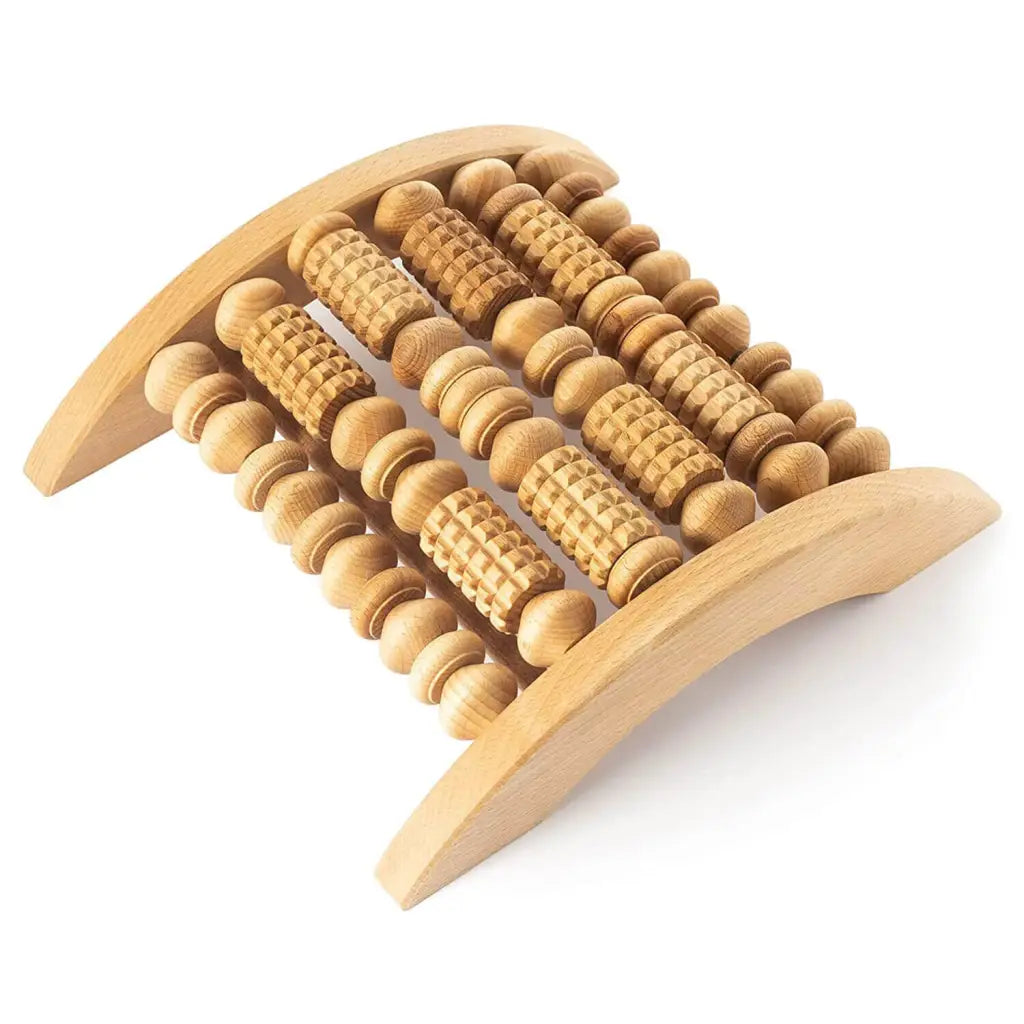
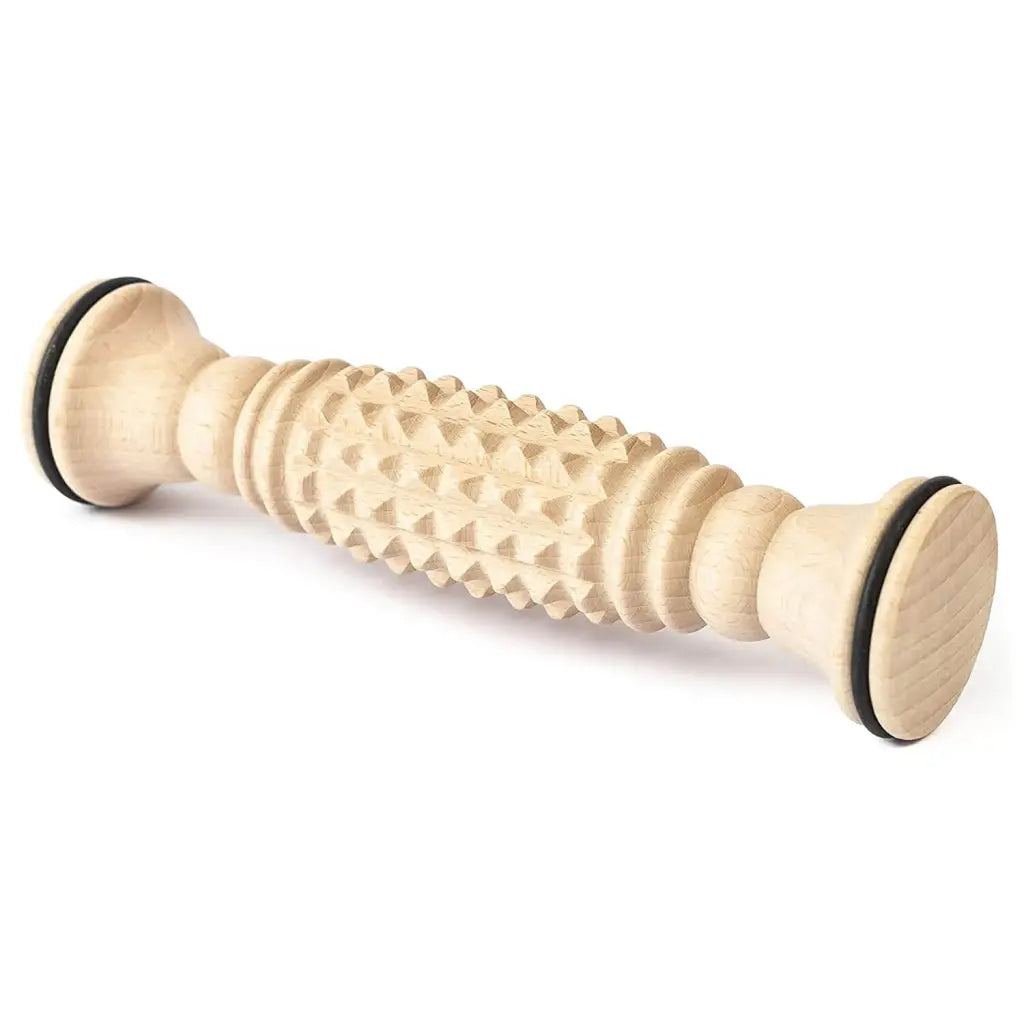
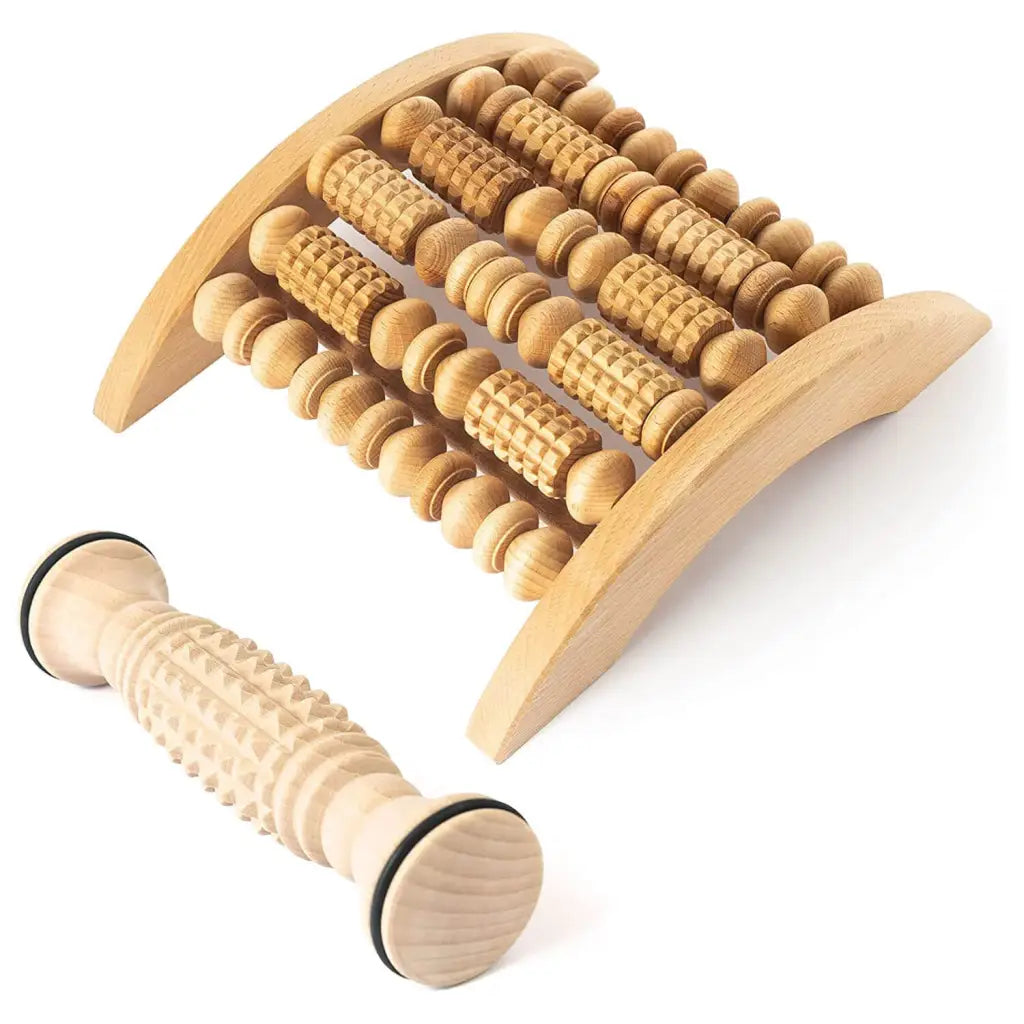
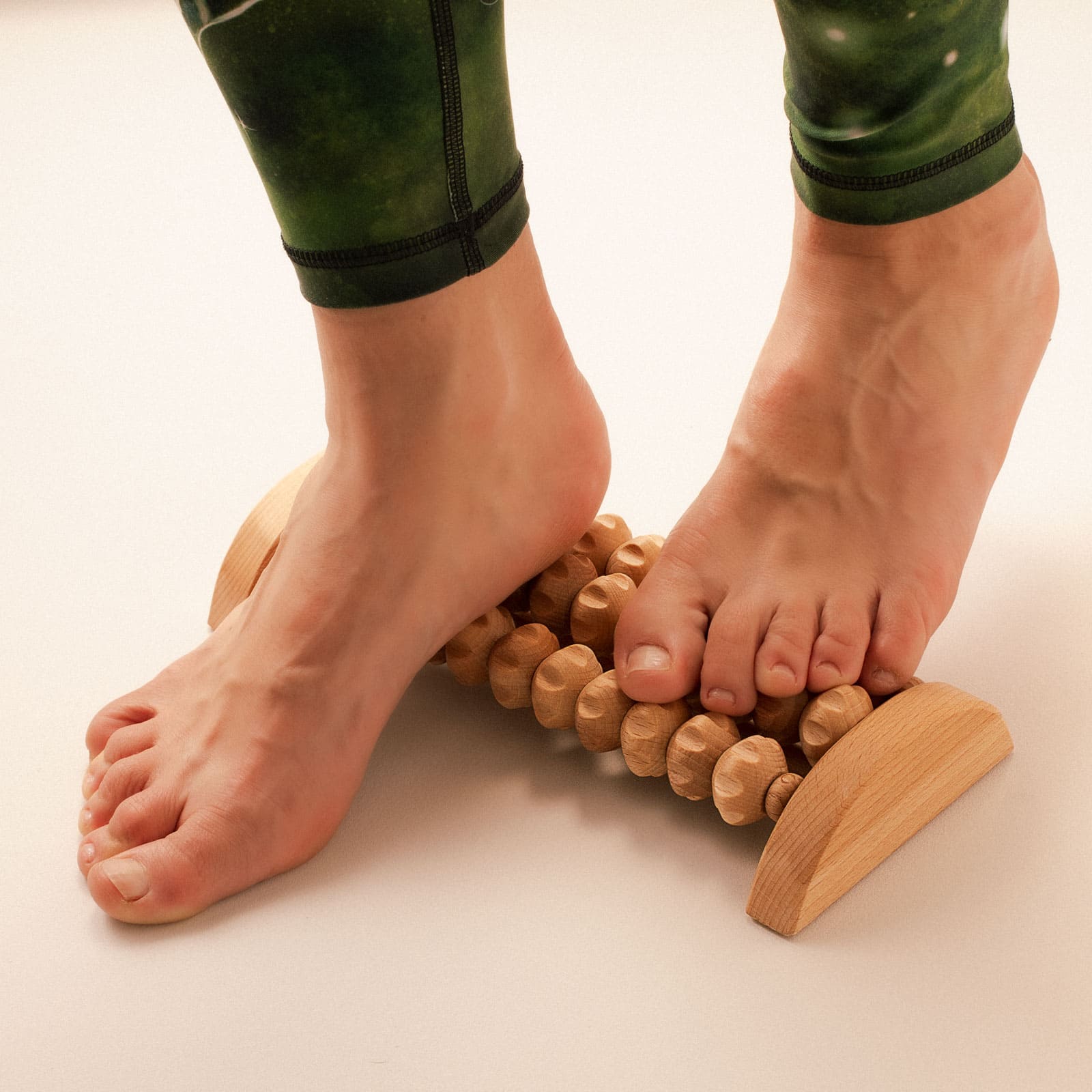
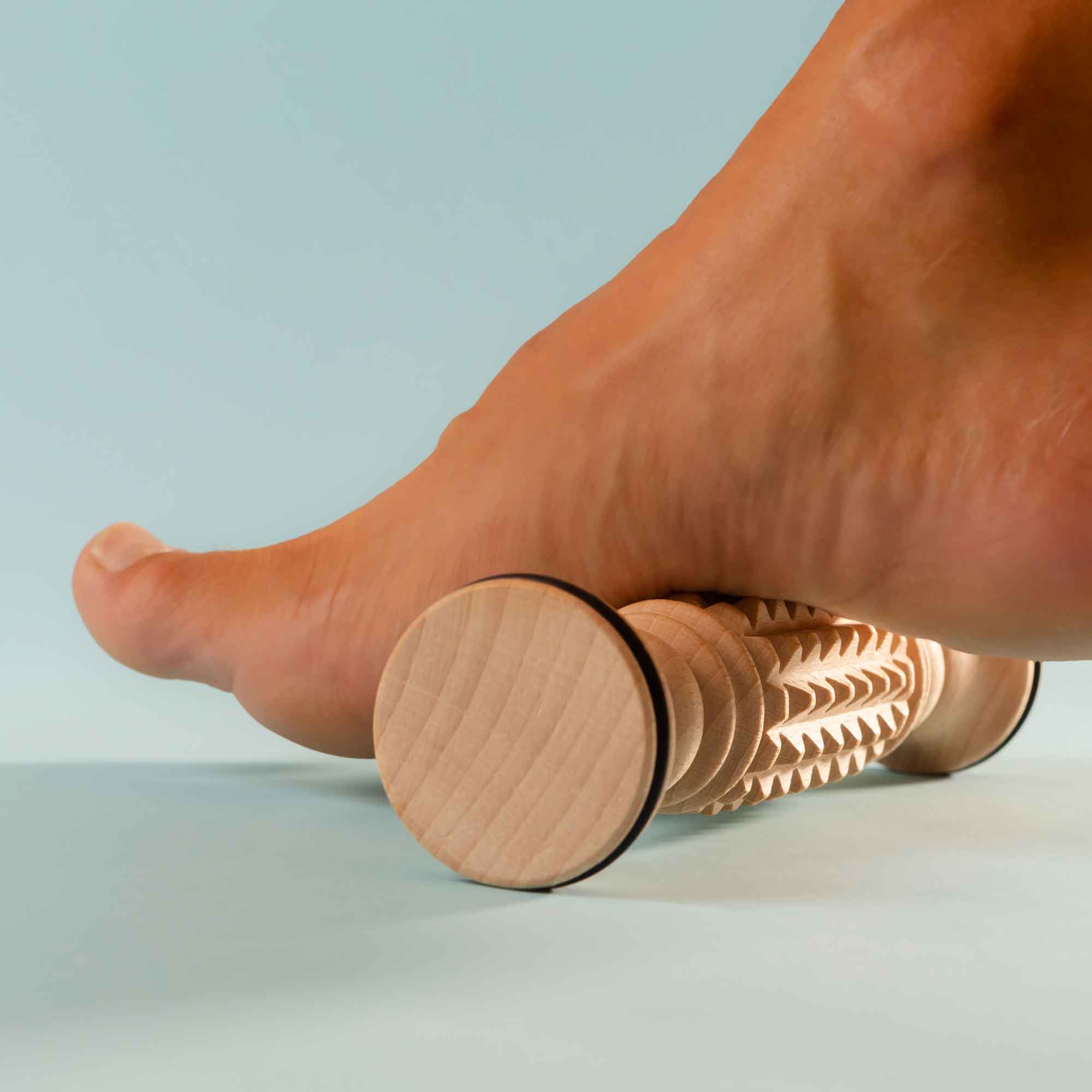
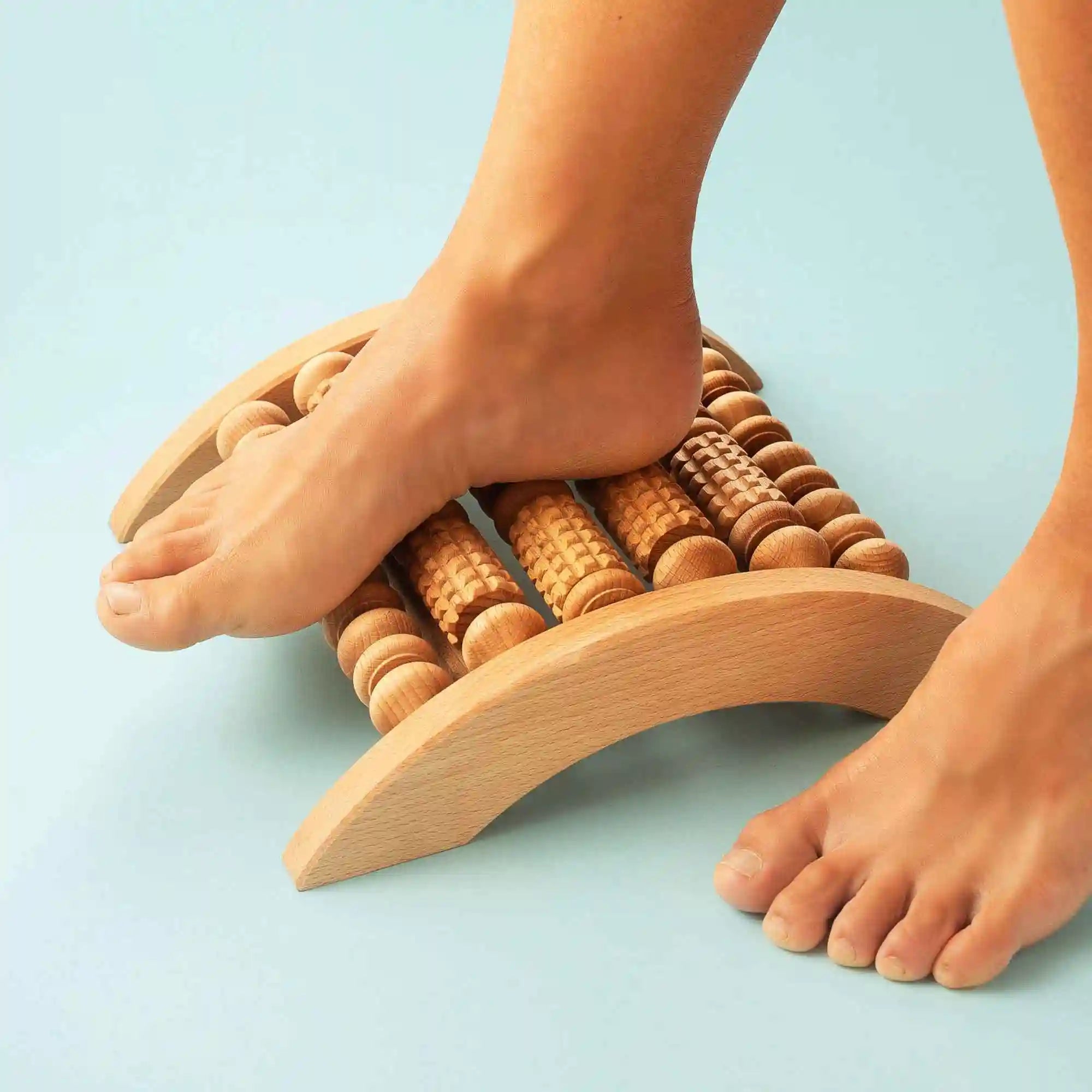
With a manual wooden foot massager, you create the movement yourself. On a stable multi-roller base, you move your feet across the rollers. With a compact roller, you position and move the tool more directly.
This gives you direct control over pace and pressure. If something feels too intense, you can slow down, reduce pressure or stop.
If you are still deciding which type of wooden massager better fits your routine, see our guide to wooden foot rollers and foot massager formats.
You can also browse Tuuli wooden foot massagers to compare the available formats.
Frequently asked questions
How do I know if I'm using my foot massager too often?
Increasing soreness, tenderness, irritation or sensitivity after use are reasons to reduce pressure, shorten the session, use the massager less often or pause. Pain is a reason to stop rather than push through.
Can I use a wooden foot massager every day?
Regular or daily use may suit some people when it remains comfortable, but daily use is not a goal you need to reach. Reduce or pause your routine if soreness, irritation or sensitivity increases.
How long should I use a foot massager?
There is no single session length that everyone needs. Start with a short, comfortable session and adjust according to how your feet respond rather than assuming that longer is better.
Should a wooden foot massager hurt?
No. Firm wooden rollers can feel different from a soft massage, but pain is not the goal and does not mean the massage is working better. Reduce the pressure or stop if the experience becomes painful.
Should beginners use less pressure?
Starting with light, controlled pressure is a practical way to become familiar with a firm wooden roller. Increase pressure only within a comfortable range rather than trying to tolerate stronger pressure.
What should I do if my feet feel sore after using a foot massager?
Reduce the pressure, shorten the session, use the massager less often or pause until your feet feel comfortable again. Seek professional advice if pain, unusual symptoms or other health concerns persist.
The practical takeaway
When deciding how often to use a wooden foot massager, remember the Tuuli 3-Part Routine: frequency, duration and pressure. They work together, so changing one may mean adjusting the others.
Start conservatively. Keep the pressure comfortable. Pay attention to how your feet respond and reduce or pause when needed.
The goal is not more time or more pressure. It is a routine that remains comfortable and easy to adjust.
Specialist review

Reviewed by Gorazd Slavinec
Massage therapist at Spina masaža
Gorazd Slavinec has worked in massage practice since 2010. His work includes manual massage techniques and the practical use of different massage tools.
Review scope: Gorazd reviewed the complete article, including guidance on frequency, session duration and pressure, regular or daily use, beginner routines, signs of overuse, when to reduce or pause use, safety cautions, manual foot-massager use and all FAQ answers.
Review date: 14 August 2026
Professional profile | Spina masaža website | Facebook | Instagram
Tuuli wooden massagers are not medical devices. This article provides general wellness information and is not medical advice.

Written by Peter Čuček
Tuuli author bio
Tuuli blog and product-support content is prepared under the Tuuli editorial workflow and published by Peter Čuček, store owner of Tuuli, where applicable. The goal is to help customers choose, use, clean and store wooden products with accurate product facts, clear safety language and practical buying guidance.
Who writes Tuuli product-support and blog content?
Tuuli content is written and maintained by the Tuuli team, with product and brand context from Tuuli GmbH. Content focuses on real product details, materials, dimensions, care instructions, personalisation options, shipping, returns and customer support.
Editorial review process
- Product facts are checked against current Tuuli product information before publication.
- Internal links point to relevant products, collections, support pages and policy pages.
- Wooden massager and self-care content is reviewed for safe, non-medical wording.
- Selected wooden-massager and self-care pages include additional specialist content review where relevant.
Editorial focus
- Clear product fit: what the product is, who it is for and what is included.
- Material, dimensions, care and use guidance based on product information.
- Safe wording for wooden massagers and self-care tools.
- Internal links to relevant products, collections, instructions and support pages.
Contact and corrections
If a product detail, guide or support answer looks unclear or outdated, contact Tuuli at info@tuuli-shop.com. We review content updates against current product information and store policies.
Where to learn more
Learn more about Tuuli on the About page, check company details in the Impressum, browse the instructions page or visit the contact page if you have a product question.