Wooden Foot Roller Guide: How to Choose and Use One
If you’ve compared wooden foot rollers, you’ve probably noticed that products that look similar can behave quite differently under your feet. A small single roller moves with your foot. A multi-roller base stays in place while your feet move across it.
So the useful question is not simply, “Which wooden foot roller is best?”
It is:
How do you want the roller to behave under your feet?
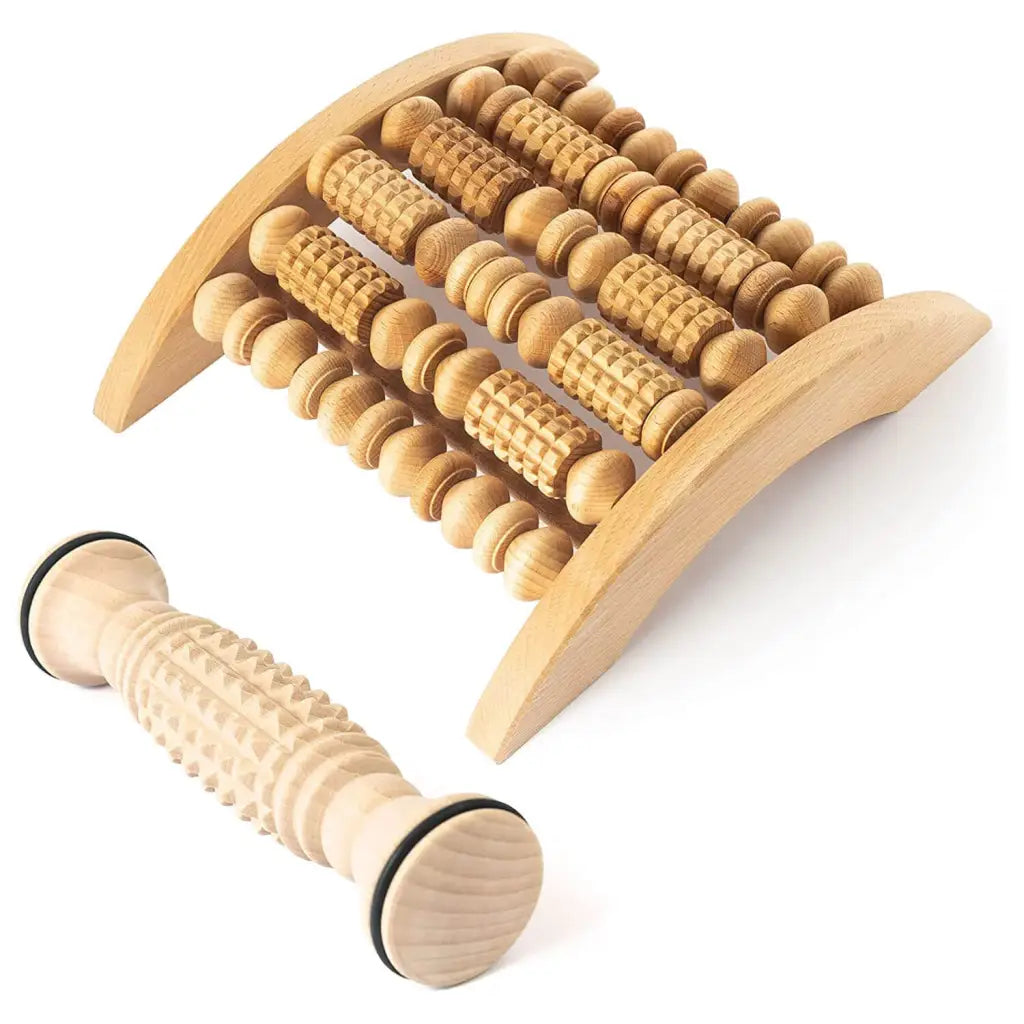
At Tuuli, that is how we distinguish the two designs. A compact roller makes sense when portability, easy storage and direct one-foot positioning matter most. A Multi-Roller makes more sense when you want a stable base and a larger rolling surface.
Both are simple manual tools. Neither should be treated as a medical treatment or used to push through pain or unusual foot symptoms.
Wooden foot rollers at a glance

| If your priority is… | Better fit | Why |
|---|---|---|
| Small storage footprint | Compact roller | Small, simple format |
| Keeping it beside a desk | Compact roller | Easy to move and store |
| Travel or portability | Compact roller | Takes up less space |
| Direct one-foot positioning | Compact roller | You position and move the roller yourself |
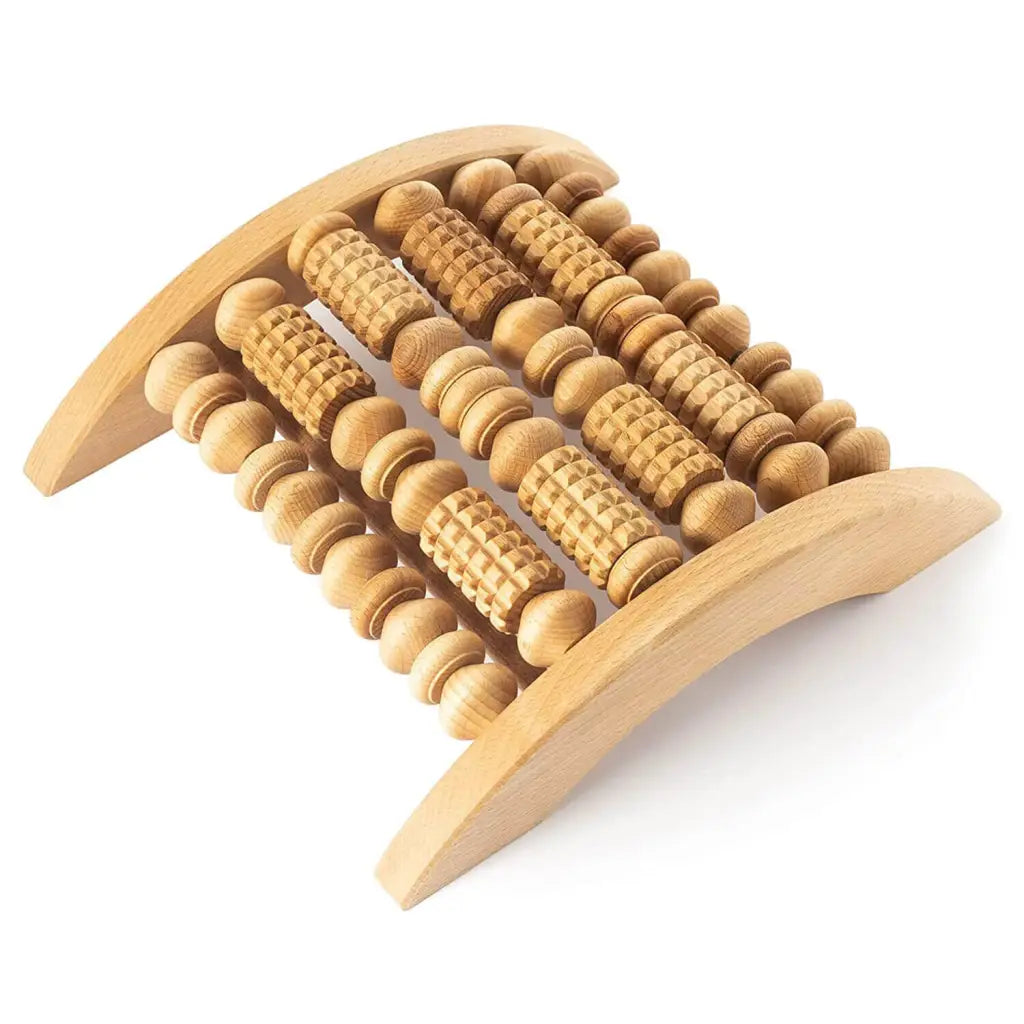
| A base that stays in place | Multi-Roller | Rollers sit inside a wider wooden platform |
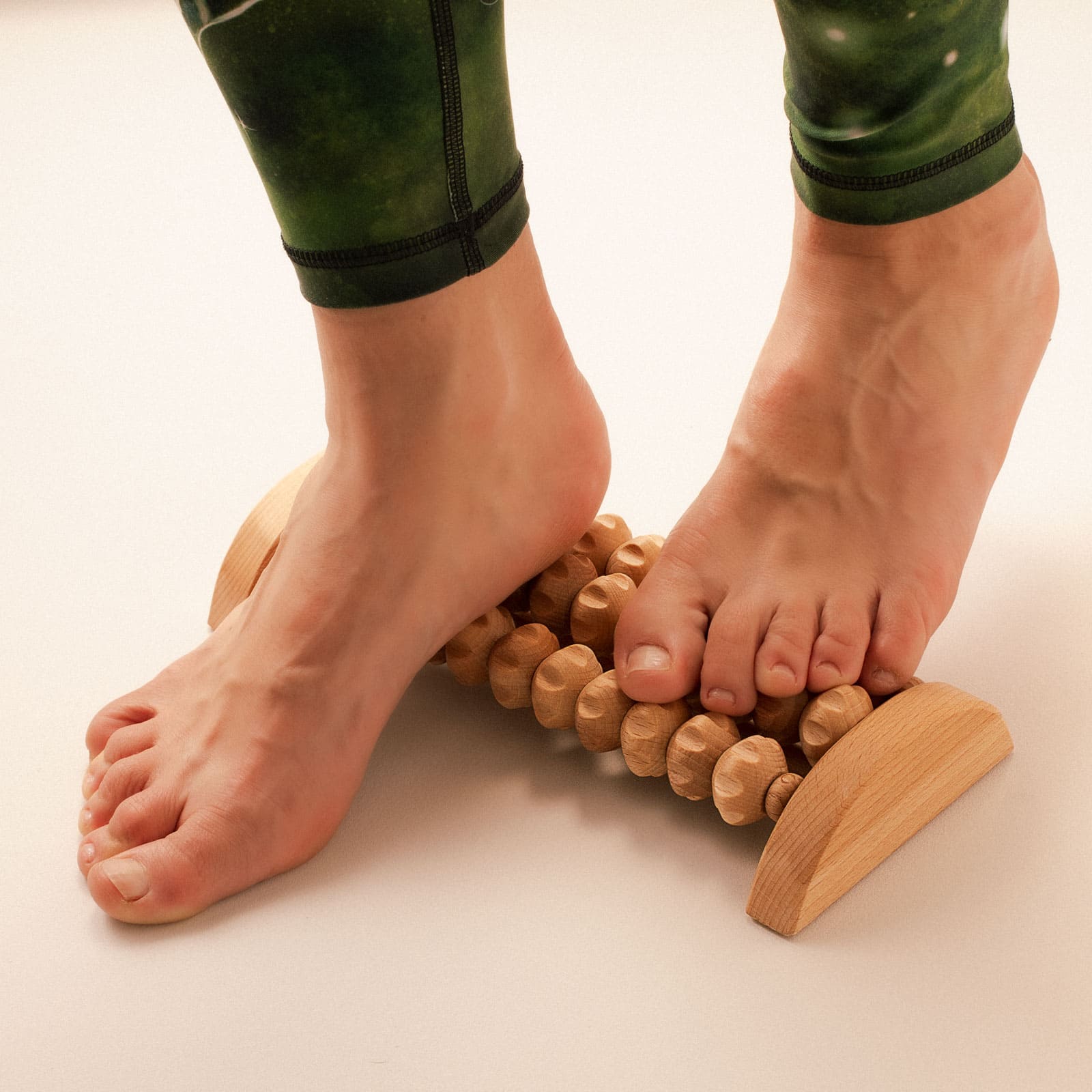
| Using both feet at once | Multi-Roller | The wider platform accommodates both feet |
| More rolling surface | Multi-Roller | Multiple rollers provide a larger contact area |
Swipe horizontally to compare the options.
The important point: more rollers do not automatically mean a better result. The two designs solve different everyday needs.
Do wooden foot rollers actually work?
That depends on what you mean by “work”.
A wooden foot roller creates a moving contact surface beneath your foot. As you roll, you control where it makes contact, how quickly it moves and how much pressure you apply. For everyday foot care, that makes it a simple way to add controlled manual rolling to a seated routine.
But “works” should not be interpreted as “treats a medical condition”. A wooden foot roller should not be presented as a treatment for foot pain, plantar fasciitis, swelling, circulation problems or other medical conditions.
A realistic expectation is simpler:
A wooden foot roller gives you a manual way to control movement, pressure and contact under your feet.
That is the practical function to judge when deciding whether one fits your routine.
The Tuuli way to choose: behaviour before intensity
Tuuli principle: Behaviour before intensity. Choose the product by how it behaves under your feet, not by how aggressive it looks.
When comparing wooden foot rollers, it is easy to focus on which product has more rollers, deeper grooves or a more pronounced surface.
We use a more useful distinction:
Choose a foot roller by how you want it to behave under your feet, not by which surface looks strongest.
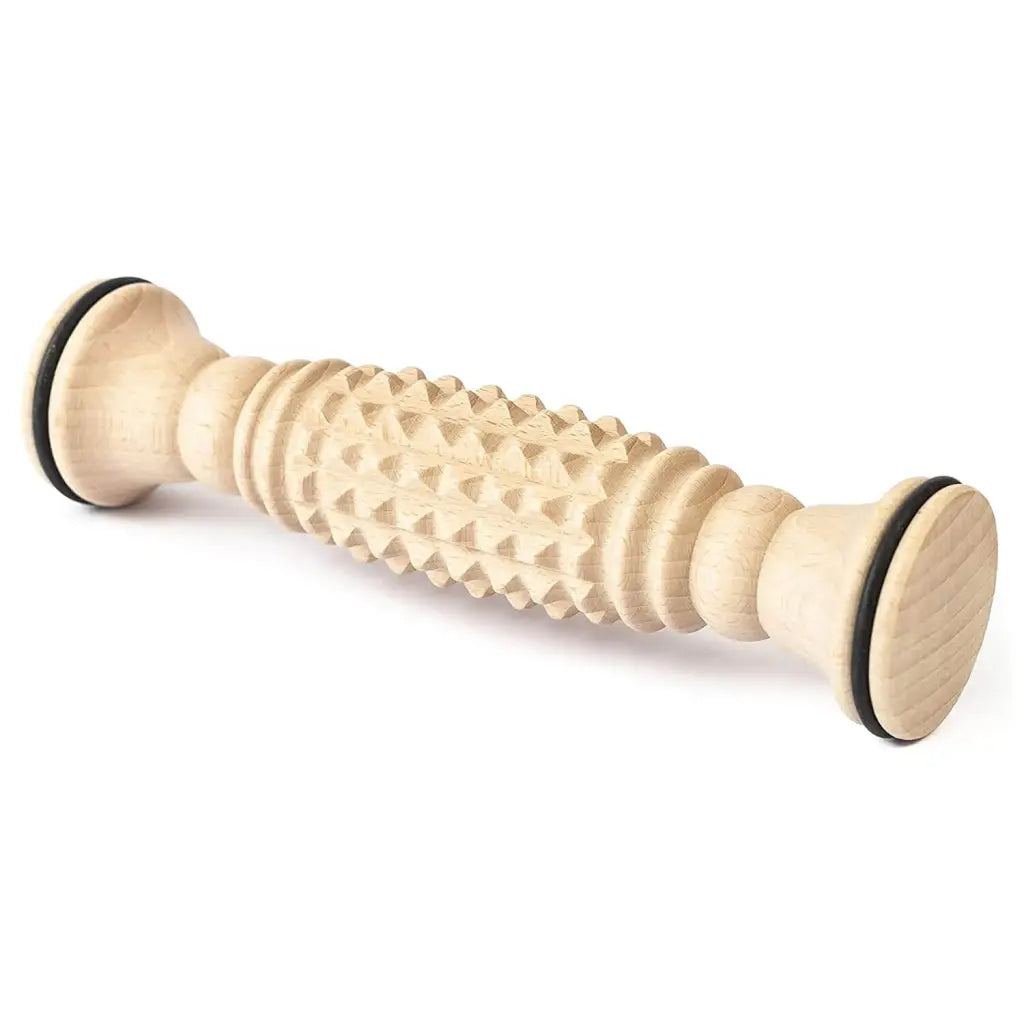
Compact roller: you move and position the roller
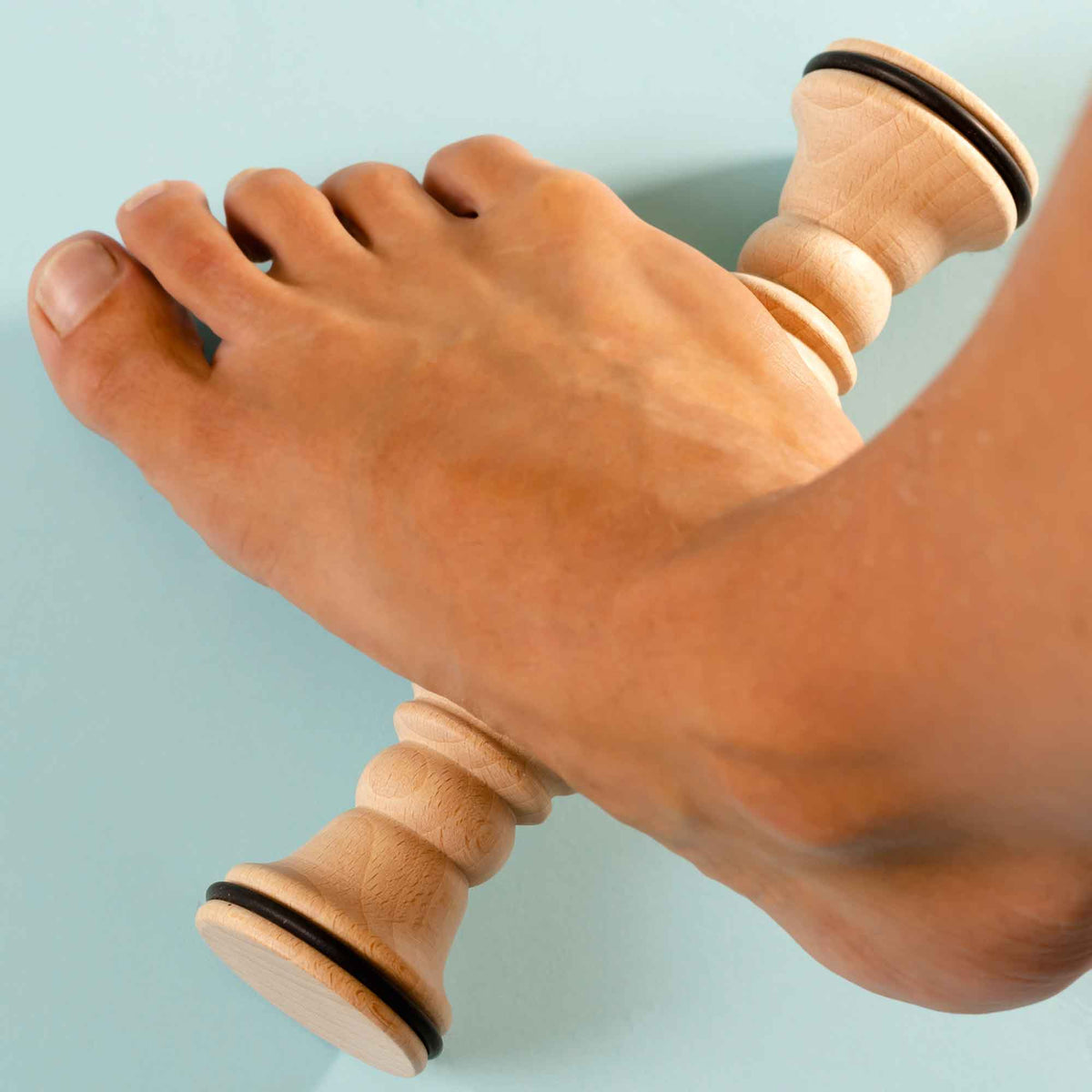
A compact single roller moves freely under one foot. You decide where it sits and guide your foot across its wooden surface.
This format is useful when you value:
- a small storage footprint;
- portability;
- direct one-foot positioning;
- a simple non-electric design.
For a wooden foot roller, size is mainly a practical format decision, not a measure of effectiveness. A smaller roller takes up less space. A longer single rolling surface gives the foot more room to travel.

Multi-Roller: the base stays in place
A Multi-Roller places several moving rollers inside a wider wooden base. The base remains on the floor while your feet move across it.
The Tuuli Beechwood Multi-Roller Foot Massager has a 29 × 24.5 cm wooden base and weighs approximately 1.2 kg. You can guide one foot across it or position both feet on the platform while seated.
This format is useful when you value:
- a stable floor-standing base;
- more rolling surface;
- room for both feet;
- less need to keep a loose roller positioned beneath the foot.
It is not medically “stronger” or inherently more effective. It is a different product architecture for a different routine.

Video: See the Tuuli Beechwood Multi-Roller Foot Massager and its stable board-style format in seated use.
A simple decision model

Compact roller
Move the roller → One foot → Easy to store → Easy to move
Multi-Roller
Move your feet → Stable base → One or both feet → Larger rolling surface
This distinction tells you more about everyday use than the number of ridges, rollers or contact points.
Why Tuuli keeps both foot-massager formats
At Tuuli, we treat stability and portability as two different buying needs, not as better and worse versions of the same product.
The compact roller is intentionally small because it gives you portability and direct control over where the roller sits. The Multi-Roller takes the opposite approach: its wider, approximately 1.2 kg base is designed to stay steadier while you move your feet across the rollers.
That is why we offer both formats. The choice is not about which one has more rollers. It is about whether you want a tool you move or a base that stays in place.
The format should fit the routine, rather than forcing the routine to fit the product.
Compact roller or Multi-Roller: which should you choose?
Choose a compact roller if:
- you want the smallest format;
- storage space matters;
- you expect to move it between rooms or take it with you;
- you want something convenient beside a desk or chair;
- you prefer positioning the roller directly with one foot.
Choose a Multi-Roller if:
- you want the product to stay positioned on the floor;
- you prefer a wider, stable base;
- you want more rolling surface;
- you want room for both feet;
- portability is less important.
Still unsure? Think about where the product will live. A roller that is easy to keep where you actually plan to use it is usually the more practical choice.
Wooden foot roller vs electric foot massager
A manual wooden roller and an electric foot massager can both sit under your feet, but they work differently.
| Manual wooden foot roller | Electric foot massager |
|---|---|
| Movement comes from your foot | Movement is powered by the device |
| You directly adjust pressure by changing how much weight you apply | Intensity depends partly on the device and its settings |
| No electricity required | Requires power or charging |
| Simple mechanical construction | May include powered functions such as kneading or heat, depending on the model |
| Compact formats can be easy to move and store | Often larger and more complex |
Swipe horizontally to compare the options.
Neither category is automatically better. Choose a manual roller if direct control, simplicity and a non-electric format matter to you. Choose a powered device if you specifically want motor-driven functions.
How should you use a wooden foot roller?
Keep the routine simple:
- Sit on a stable chair or sofa.
- Place the roller on a flat, stable, non-slip surface.
- Rest one foot lightly on the roller.
- Move your foot slowly backwards and forwards.
- Adjust the position to reach different comfortable areas of the sole.
- Start with light pressure.
- Reduce pressure or stop if the movement becomes painful or causes unusual discomfort.
With a Multi-Roller, the base remains on the floor while your feet move across its rollers. With a compact roller, pay more attention to keeping the loose roller safely positioned beneath your foot.
There is no need to chase maximum pressure or a particular number of minutes. Comfort and control are better guides than intensity.
For a more detailed routine, read How to Use a Wooden Foot Massager Safely.
How much pressure should you use?
Start lightly. One practical advantage of a manual roller is that you can reduce pressure immediately by taking weight off your foot. Do not force your sole down onto the wooden surface just to create a stronger sensation.
A useful rule is:
If you have to tense your leg, brace yourself or push through pain to keep rolling, reduce the pressure or stop.
A more pronounced surface may create more concentrated contact, but it should not automatically be treated as the better option.
What should you check before buying?
Focus on the details that will affect everyday use.
Size and storage
Where will you keep it? A compact roller is easier to store or move. A Multi-Roller needs more space but provides a stable platform.
Stability
Do you want to position a loose roller yourself, or would you rather move your feet across a base that stays in place?
One foot or both feet
Compact rollers naturally suit focused one-foot use. A wider Multi-Roller platform provides room for both feet.
Material
Check what the product is actually made from rather than assuming every “wooden” roller uses the same material. Tuuli foot massagers discussed in this guide use European beechwood where specified on the individual product page.
Care
Follow the care instructions for the specific product. Do not assume that a wooden massager should be soaked or cleaned in the same way as a plastic or waterproof device.
When should you not use a foot roller?
Do not roll directly over:
- broken, irritated or infected skin;
- a recent foot or ankle injury;
- unexplained or significant swelling;
- an area with unusual or worsening pain;
- an area where sensation is reduced or altered.
Stop if rolling causes pain, numbness, tingling, dizziness, loss of balance or another unusual symptom.
If swelling, pain, numbness, skin changes or other symptoms are persistent, unexplained or concerning, the priority is understanding the cause rather than trying to massage through them.
For swelling specifically, see the separate Tuuli guide Can Foot Massage Help Swollen Feet? Safety First.
What Tuuli has learned from comparing foot-massager formats
Offering different wooden foot-massager formats makes one practical difference especially clear: format changes the routine more than product names suggest.
A compact roller and a Multi-Roller may both be called wooden foot massagers, but you interact with them differently:
- with a compact roller, you manage both the foot and the tool;
- with a Multi-Roller, the tool becomes the platform and you primarily move your feet.
That is why our comparison starts with practical questions rather than asking which model “massages better”:
- Where will I use it?
- Where will I store it?
- Do I want the roller to move?
- Do I want a stable base?
- Do I want to use one foot or both?
- How much rolling surface do I want?
These questions lead to a clearer buying decision without making assumptions about medical outcomes.
Which one should I choose?
Choose a compact roller if portability, easy storage and direct one-foot positioning matter most.
Choose the Multi-Roller if you want a stable base, more rolling surface and room for both feet.
Still unsure? Compare the available Tuuli wooden foot massager formats and choose according to the place and routine you actually have in mind.
Related Tuuli guides and products
- For step-by-step setup and technique, read How to Use a Wooden Foot Massager Safely.
- For swelling-specific warning signs and boundaries, read Can Foot Massage Help Swollen Feet? Safety First.
- To compare the full family, browse Tuuli wooden foot massagers.
- See the Compact Wooden Foot Roller or the Beechwood Multi-Roller Foot Massager.
- For product-specific handling and care, see the Tuuli product instructions.
Frequently asked questions
Do wooden foot rollers actually work?
They work as manual rolling tools. You move your foot over the wooden surface and control the position, speed and pressure yourself. They should not be interpreted as medical treatments for pain, swelling, plantar fasciitis, circulation problems or other conditions.
Is a Multi-Roller better than a single foot roller?
Not universally. A Multi-Roller offers a stable base and more rolling surface. A compact roller is smaller, easier to store and gives direct one-foot positioning. The better choice depends on how you want to use it.
What size wooden foot roller should I buy?
Choose size according to use and storage rather than assuming a larger roller is more effective. A compact format is easier to store and move. A longer or multi-roller format provides more rolling surface.
Can I use a wooden foot roller every day?
If foot rolling is appropriate for you, keep the routine comfortable and respond to how your feet feel rather than forcing a fixed schedule. Stop if you develop pain, numbness, tingling, skin irritation or another unusual symptom.
Should a wooden foot roller hurt?
No. More pressure is not automatically more useful. Start lightly and reduce pressure or stop if rolling becomes painful or causes numbness, tingling or unusual discomfort.
Why do wooden foot rollers have different surface shapes?
Different shapes change how the wooden surface contacts the foot and how concentrated that contact feels. A more pronounced surface is not automatically better. Choose a format that feels controllable and comfortable rather than chasing maximum intensity.
Can a wooden foot roller help swollen feet?
Swelling has many possible causes, so it should not automatically be treated with massage. New, unexplained, significant or concerning swelling should be assessed appropriately before using a foot massager.
Are wooden foot rollers medical devices?
Tuuli wooden foot rollers are manual self-care and comfort tools. They are not medical devices and are not intended to diagnose, treat or cure medical conditions.
The simple way to choose
The best wooden foot roller is not the one with the most rollers. It is the one whose size, movement and stability fit the way you want to use it.
Choose a compact roller when easy storage, portability and direct one-foot positioning matter most. Choose a Multi-Roller when you want a stable base, more rolling surface and room for both feet.
Whichever format you choose, keep the same principle:
Use it while seated, start gently and let comfort determine the pressure.
A good foot-care tool should make the routine simpler. It should not encourage you to ignore pain, swelling, numbness or another symptom that needs proper attention.
Specialist review

Reviewed by Gorazd Slavinec
Massage therapist at Spina masaža
Gorazd Slavinec has worked in massage practice since 2010. His work includes manual massage techniques and the practical use of different massage tools.
Review scope: Gorazd reviewed the complete article, including practical foot-roller use, pressure guidance, seated product handling, the compact-versus-Multi-Roller comparison, safe-use limits, realistic non-medical expectations and all FAQ answers.
Review date: 12 August 2026
Professional profile | Spina masaža website | Facebook | Instagram
Safety references
Safety recommendations in this article are consistent with publicly available guidance on foot swelling and diabetes-related foot care from the NHS and CDC.
Tuuli wooden foot massagers are manual wellness products, not medical devices. This article provides general product and safety information and is not a diagnosis, treatment plan or substitute for advice from a qualified healthcare professional.

Written by Peter Čuček
Tuuli author bio
Tuuli blog and product-support content is prepared under the Tuuli editorial workflow and published by Peter Čuček, store owner of Tuuli, where applicable. The goal is to help customers choose, use, clean and store wooden products with accurate product facts, clear safety language and practical buying guidance.
Who writes Tuuli product-support and blog content?
Tuuli content is written and maintained by the Tuuli team, with product and brand context from Tuuli GmbH. Content focuses on real product details, materials, dimensions, care instructions, personalisation options, shipping, returns and customer support.
Editorial review process
- Product facts are checked against current Tuuli product information before publication.
- Internal links point to relevant products, collections, support pages and policy pages.
- Wooden massager and self-care content is reviewed for safe, non-medical wording.
- Selected wooden-massager and self-care pages include additional specialist content review where relevant.
Editorial focus
- Clear product fit: what the product is, who it is for and what is included.
- Material, dimensions, care and use guidance based on product information.
- Safe wording for wooden massagers and self-care tools.
- Internal links to relevant products, collections, instructions and support pages.
Contact and corrections
If a product detail, guide or support answer looks unclear or outdated, contact Tuuli at info@tuuli-shop.com. We review content updates against current product information and store policies.
Where to learn more
Learn more about Tuuli on the About page, check company details in the Impressum, browse the instructions page or visit the contact page if you have a product question.